
“Is this spam?” is the question that always comes up when someone starts prospecting by email.
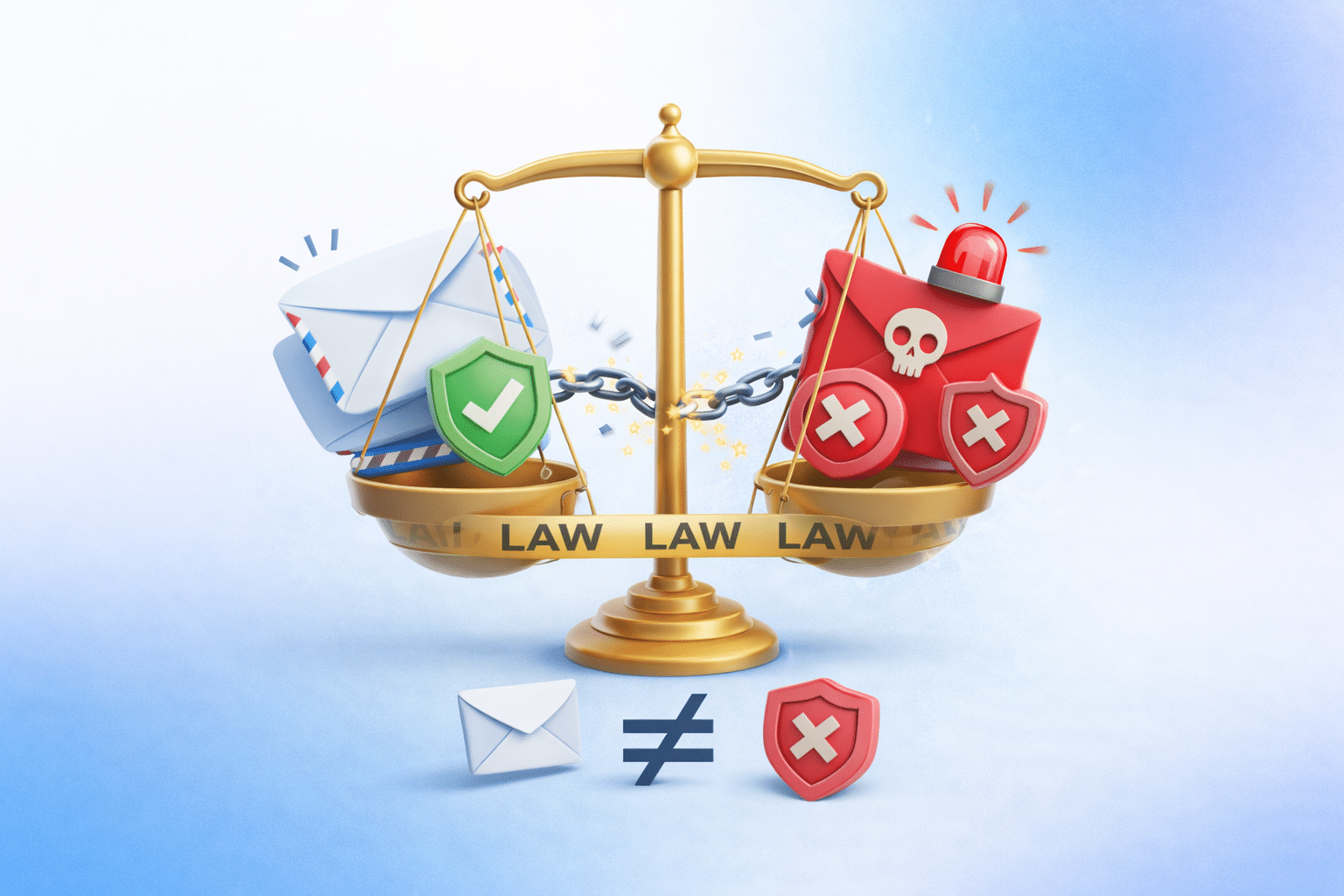
And it makes sense: sometimes cold email, email marketing , and spam are lumped together. But they are not the same. In fact, from a legal and practical point of view, the difference is not only in how many emails you send, but in how and why you send them.
In this article, we explain to you, clearly and without jargon, what separates legitimate cold email from something that can be considered spam or a risky practice. It is not legal advice, but it is a useful guide to make better decisions.
1) First: what is “cold email” and what is “spam”?
Cold email is sending an email to someone you have no previous relationship with to start a business conversation (usually B2B), with an approach more akin to a professional presentation than a mass campaign.
Spam (in practice) is usually mass or indiscriminate mailing, with little or no criteria of relevance, without transparency, without unsubscribe/opposition control and, many times, using data of dubious origin.
The key: It’s not just “spam.” It’s spam + malpractice.
2) Legality: there is no single answer, but there are clear signs
In Europe, the legal fit of cold email depends on the context: whether it is B2B or B2C, what type of data is used, what is the legal basis, how the recipient is informed and how their right to object is managed.
For this reason, be wary of two typical phrases:
- “It’s legal because it’s B2B” → Not always.
- “It is illegal if there is no consent” → It depends on the case.
The sensible thing to do is to understand which practices bring you closer to a defensible approach and which put you in the red zone.
3) The 7 differences that separate professional cold email from spam
1) Relevance: Does it make sense for you to write to that person?
A “well-done” cold email relies on relevance: you write to someone because it fits your proposal, not because they “have an email”.
- Good: contact by role/sector/real fit with your service.
- Risk: Huge, generic lists with no segmentation.
2) Clear purpose: what do you process their data for?
In data protection, purpose rules. If your goal is to start a B2B business conversation, say so and act on it.
- Good: a concrete and honest proposal.
- Risk: ambiguous texts, “I’m writing to you just because”, or hidden purposes.
3) Origin of the data: where does that email come from?
The fact that a piece of data is publicly accessible does not make it “legally free”. The important thing is whether the origin is legitimate and whether the use is reasonable.
- Good: professional contact details published by the business itself or in professional contexts.
- Risk: Purchased databases, leaked data, or untraceable listings.
4) Transparency: Does the recipient understand who you are and why you write?
A professional email doesn’t play hide-and-seek.
- Good: you identify yourself, explain the reason for the contact and provide a way to object.
- Risk: opaque senders, misleading messages, or no explanation of the reason.
5) Control and limits: are you sending “with head” or “like a beast”?
The way you ship matters. Sending thousands of emails without control increases the risk (legal, reputational and deliverability).
- Good: reasonable volumes, testing, segmentation, and progressive improvement.
- Risk: Aggressive automation without filters or review.
6) Right to object: what happens if they say “no”?
This point is critical. If someone doesn’t want you to contact them, you need to be able to stop and respect them.
- Well: a clear way to stop receiving emails and processes to apply it.
- Risk: ignoring opposition, insisting or “switching accounts” to continue.
7) Message and tone: does it seem like a conversation or a trap?
Spam usually sounds like a “sales template”. Legitimate cold email sounds like a person and context.
- Good: brief, specific, without exaggeration, with a real option not to continue.
- Risk: aggressive claims, false urgencies, manipulation or deception.
4) The quick test: 5 questions that will tell you if you are doing well
Before launching a campaign, ask yourself:
- 1) Does my email add value or is it pure “spray and pray”?
- 2) Can I justify why that person is a relevant contact?
- 3) Am I clear about where the data comes from and why I use it?
- 4) Would the recipient understand the reason without feeling watched?
- 5) If I am asked not to write anymore, can I comply immediately?
If you doubt several, it’s not the end of the world, but it is a sign: it’s time to adjust the focus.
5) Conclusion: Spam is a practice, not a tool
Cold email can be a legitimate strategy if it is done with criteria of relevance, transparency, proportionality and respect for the right to object.
Spam, on the other hand, usually appears when the goal is to “send a lot” without control, without context and without respect for the person receiving the message.
This article is informational and does not constitute personalized legal advice. If your case is complex (large volumes, sensitive processing, profiling, multiple sources, etc.), it is advisable to consult with a data protection professional.
Bonus: if you do cold email, do it with processes (not luck)
Beyond legality, a responsible approach also improves results: fewer complaints, better deliverability, and more real conversations.
And if you want to run email prospecting campaigns with a neat workflow, you can do so with Mailerfind.