
The question is common, logical and reasonable: can cold emails be sent legally in Europe?
The short answer is: yes, it is possible. The correct answer is: it depends on how, to whom, and with what guarantees.
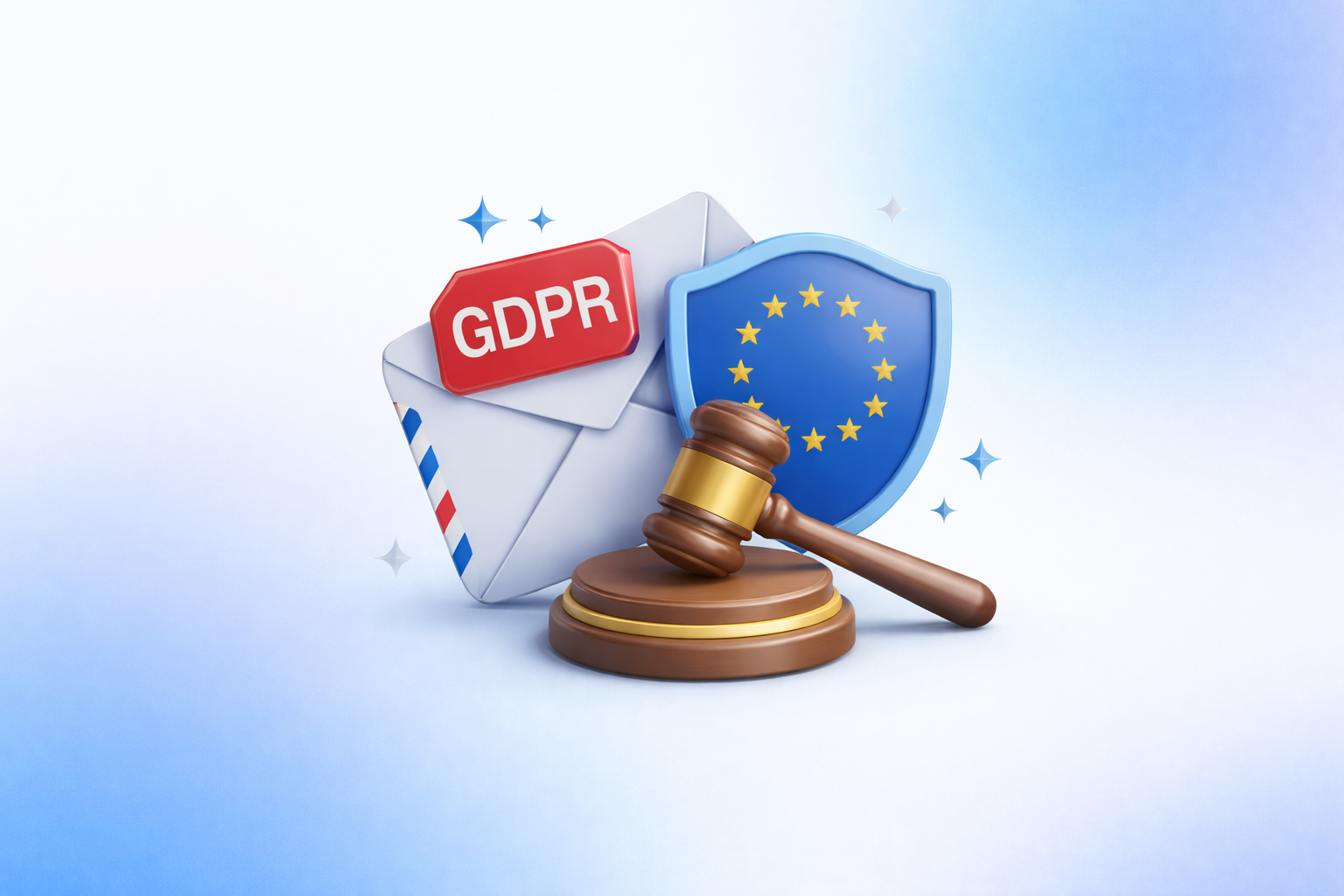
In Europe, commercial prospecting by email is not prohibited by default, but it is regulated. Understanding this legal framework well is key to being able to use cold email as a recruitment channel without generating unnecessary risks.
The most common mistake: thinking in black or white
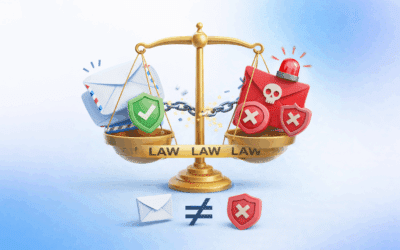
One of the biggest misunderstandings is to pose cold email as something that is “legal” or “illegal” without nuance.
European regulations do not work like that. The GDPR and complementary regulations (such as the LSSI in Spain) do not prohibit initial business contact, but require certain conditions to be met.
Therefore, to claim that “cold email is illegal in Europe” is as incorrect as to say that “all cold email is legal without further ado”.
What rules come into play
In Europe, the sending of commercial emails is mainly affected by:
- GDPR (General Data Protection Regulation), which regulates the processing of personal data.
- National regulations on information society services (for example, the LSSI in Spain), which regulates electronic commercial communications.
Both rules must be interpreted together.
The key: not all commercial mail is created equal
From a legal point of view, it is not the same:
- A generic, bulk email sent without segmentation.
- An email addressed to a professional contact, with a proposal related to their activity.
- A B2B email versus one aimed at end consumers (B2C).
Context matters, and a lot.
Cold email in B2B environments
In the B2B field (companies, professionals, freelancers), cold email is a widely used channel in Europe and can be supported, in many cases, by the legal basis of legitimate interest.
This does not mean that it is automatic or unlimited, but it does mean that the regulations recognise that companies may have a legitimate interest in contacting other professionals when:
- The contact is of a professional nature.
- The proposal is related to their activity or function.
- The impact on the person is reasonable and expected.
- Their rights (especially the right to object) are respected.
This approach is aligned with the usual practice in European markets and with the interpretation of many DPOs and authorities.
Is prior consent required?
Not always.
In the B2B context, the GDPR allows the processing of business contact data to be based on legitimate interest, provided that proper analysis has been carried out and the necessary safeguards are in place.
Prior consent is therefore not the only possible legal basis for sending a first professional email.
What Makes the Difference Between a Reasonable Practice and a Legal Problem
More than sending an email, what usually generates problems is how it is done.
Some key elements that are often considered good practices:
- Use of unnecessary professional, not personal, contact details.
- Relevant messages related to the recipient’s activity.
- Clear identification of the sender.
- Transparent explanation of the reason for the contact.
- Simple and effective mechanism to oppose future shipments.
- Immediate respect for opposition requests.
Well-planned cold email does not seek to invade, but to start a professional conversation.
What if someone complains?
Complaints do not usually arise from a single well-focused email, but from repetitive, aggressive or non-transparent practices.
Precisely for this reason, documenting the legal basis for processing, limiting the volume of shipments and respecting the rights of recipients is an essential part of a sustainable strategy.
There are no universal recipes
It is important to be clear: there is no one-size-fits-all formula.
The legality of cold email depends on factors such as:
- The type of recipient.
- The purpose of the contact.
- The type of data used.
- The content of the message.
- The transparency and control measures applied.
Therefore, any prospecting strategy must be analyzed in its concrete context.
Conclusion
Sending cold emails in Europe is not prohibited. It is a common practice in professional environments and can be carried out in a way that is compatible with the regulations when it is done with criteria, proportionality and respect for people’s rights.
The objective of the legal framework is not to prevent commercial activity, but to prevent abuses.
When cold email is used as a professional contact tool, and not as indiscriminate spam, it can be a perfectly valid channel within a recruitment strategy.
This article is for informational purposes only and does not constitute personalized legal advice.
Cold email and recruitment tools
There are platforms that facilitate the technical execution of cold email campaigns and the organization of professional contacts, such as Mailerfind. In any case, regulatory compliance will always depend on the use made by each user and how they configure their prospecting strategy.