
If your customer acquisition costs keep climbing while lead quality keeps slipping, the real question is not whether you need more traffic. It is whether cold email versus paid ads is the right fight for your business to solve first. For most small teams, agencies, consultants, and eCommerce brands, this decision shapes cash flow, sales velocity, and how much control you actually have over growth.
Paid ads are easy to start. You set a budget, launch a campaign, and hope the platform finds buyers. Cold email is different. You identify specific prospects, reach out directly, and measure response at the contact level. Both can work. But they solve different problems, and pretending they are interchangeable is how budgets get wasted.
Cold email versus paid ads: the core difference
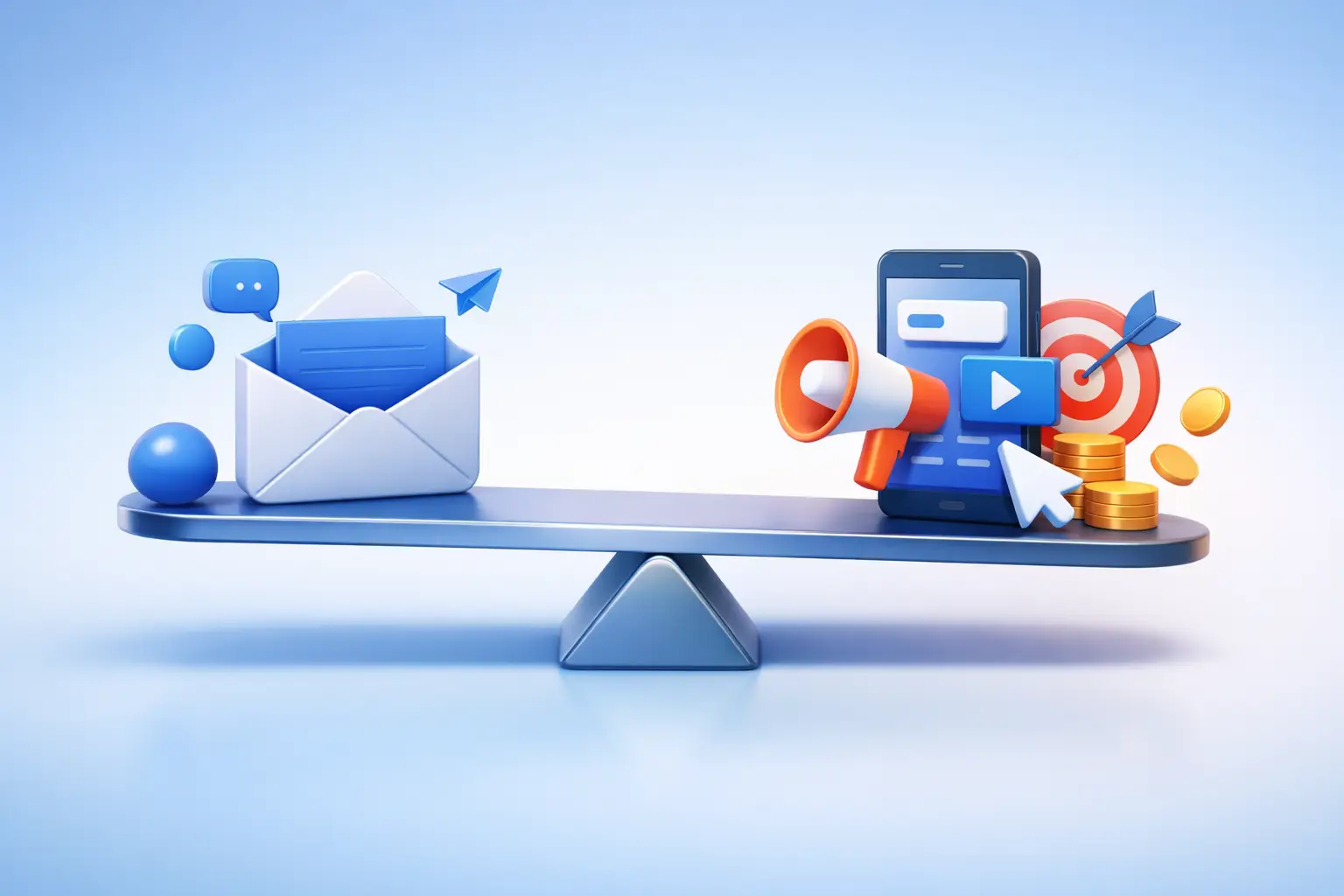
The fastest way to understand cold email versus paid ads is this: paid ads rent attention, while cold email creates direct conversations.
With paid ads, you are paying a platform to place your offer in front of an audience. That audience may be broad, interest-based, lookalike, or behavior-driven. You can generate demand, capture existing demand, or retarget visitors who already know you. It is powerful, but you are always operating inside someone else’s system, pricing model, and algorithm.
With cold email, you are building outreach around named prospects or highly specific segments. You are not waiting for someone to click through a feed because an ad happened to catch them at the right moment. You are putting a relevant offer directly into the inbox of a business owner, operator, buyer, creator, or lead you actually want.
That difference matters because one channel is broad by design and the other is precise by design.
When paid ads make sense
Paid ads are strong when your offer works well at scale and your economics can absorb testing. If you sell a product with broad appeal, have proven creative, and understand your conversion funnel, ads can produce volume quickly. They are also useful when brand awareness matters, when visual storytelling drives sales, or when you need to retarget people who have already shown interest.
For eCommerce brands, paid social and search can be effective because the path from impression to purchase is often shorter. A compelling product, a sharp landing page, and a strong offer can convert without a sales call. For local businesses, paid ads can also work when there is clear intent and enough search demand.
The problem is cost. CPMs rise. CPCs fluctuate. Conversion rates change when competition increases. Creative fatigue sets in. A campaign that worked last month can fade fast, and then you are back in the cycle of testing audiences, swapping hooks, and feeding more budget into the machine.
That is manageable if your margins are healthy and your team knows what it is doing. It is a bigger issue if every dollar matters and you cannot afford long learning curves.
When cold email makes more sense
Cold email is often the better play when you need qualified leads, not just attention. It is especially strong for service businesses, agencies, consultants, educators, B2B offers, high-ticket products, and niche operators who know exactly who they want to reach.
If your best customers share clear characteristics, cold email lets you go straight to them. That could mean business owners in a specific city, Instagram followers of competing brands, people engaging with niche hashtags, or prospects tied to a particular market segment. Instead of paying to interrupt a broad audience, you can contact a list built around actual fit.
This is why cold email usually outperforms paid ads in early-stage outbound or lean acquisition models. You spend less upfront, get feedback faster, and learn what messaging lands without burning budget on impressions that never turn into conversations.
It also gives you tighter control. You know who was contacted, what message they saw, who replied, and where the conversation stalled. That level of visibility helps you improve faster.
Cost is where the gap gets obvious
Most businesses asking about cold email versus paid ads are really asking a budget question.
Paid ads can scale quickly, but they require continuous spend. Stop paying, and the traffic stops. That is not automatically bad, but it means acquisition depends on steady ad investment plus the hidden costs of creative production, landing page optimization, tracking, and testing.
Cold email usually has lower upfront costs. You invest in lead sourcing, outreach infrastructure, and copy. After that, your cost per conversation can be significantly lower than paid traffic, especially in B2B or high-value niches. If your targeting is solid and your offer is relevant, a small outreach operation can generate opportunities without requiring ad-level budgets.
That does not mean cold email is free or effortless. Bad data, weak positioning, and generic copy will kill performance fast. But from a pure efficiency standpoint, cold email often gives smaller businesses a more practical path to pipeline.
Targeting quality beats audience size
Paid ads offer advanced targeting, but there is still a big difference between inferred interest and identified intent.
An ad platform can tell you someone likes entrepreneurship, fitness, marketing, or skincare. That can be useful, but it is still a prediction. Cold email allows you to build lists based on far more tangible signals. You can identify prospects connected to specific Instagram accounts, hashtags, locations, or engagement patterns, then approach them with an offer that matches their context.
That shift from broad audience targeting to direct prospect identification is where many businesses find better ROI. You are no longer hoping the platform finds enough of the right people. You are selecting those people yourself.
For growth-focused teams, that control matters. It reduces waste and makes your acquisition process less dependent on platform volatility.
Speed depends on what you mean by results
If by speed you mean visibility, paid ads win. You can launch today and start generating impressions and clicks almost immediately.
If by speed you mean qualified conversations, cold email often wins. A well-built list and a strong first message can produce replies quickly, sometimes faster than an ad campaign can gather enough data to optimize. And those replies tend to be more actionable because they come from identified prospects rather than anonymous traffic.
This is one of the biggest misconceptions in the market. Paid ads feel faster because metrics appear instantly. But impressions are not opportunities. Clicks are not sales meetings. If your business depends on direct conversations to close deals, cold email can move the pipeline faster than ads that still need funnel refinement.
The real trade-off is operational complexity
Paid ads look simple at the surface, but they become technical fast. Tracking, attribution, audience exclusions, creative testing, bidding, and landing page conversion all affect performance. If one piece is weak, the whole system underperforms.
Cold email has its own complexity, but it is usually more operational than technical. You need accurate data, clear segmentation, strong messaging, and a reliable sending process. The upside is that these variables are easier for many small teams to understand and control.
That is part of why platforms that combine audience extraction with outreach execution are gaining traction. Instead of stitching together multiple tools and workflows, businesses can go from prospect discovery to campaign launch in one process. For teams that want speed without technical overhead, that is a meaningful advantage.
Should you choose one or use both?
It depends on your sales model.
If you sell low-ticket products to a broad market, paid ads may deserve the larger share of attention. If you sell services, high-ticket offers, or niche solutions where precision matters more than scale, cold email is usually the better first move.
In many cases, the smartest answer is not either-or. Use cold email to generate direct opportunities and paid ads to support retargeting, social proof, or brand familiarity. Cold email starts conversations. Paid ads can reinforce your positioning after prospects have seen your name.
But if resources are limited and you need to pick one channel first, choose the one that gives you tighter targeting, lower risk, and clearer path to revenue. For a lot of SMBs, that is cold email.
Cold email versus paid ads for lean growth
For businesses that cannot afford wasted spend, cold email versus paid ads is less about marketing philosophy and more about control. Paid ads can absolutely work, but they often demand more budget, more testing, and more tolerance for platform swings. Cold email puts your effort closer to the sale.
That is why so many operators are shifting toward direct prospecting systems that let them identify specific audiences, launch outreach quickly, and track outcomes at the lead level. Tools like Mailerfind fit that model because they reduce the friction between finding prospects and turning them into conversations.
If your goal is vanity metrics, paid ads will give you plenty to look at. If your goal is qualified leads, direct outreach usually gives you a straighter line. Start where you can control the variables, learn quickly, and build momentum from actual buyer responses.