
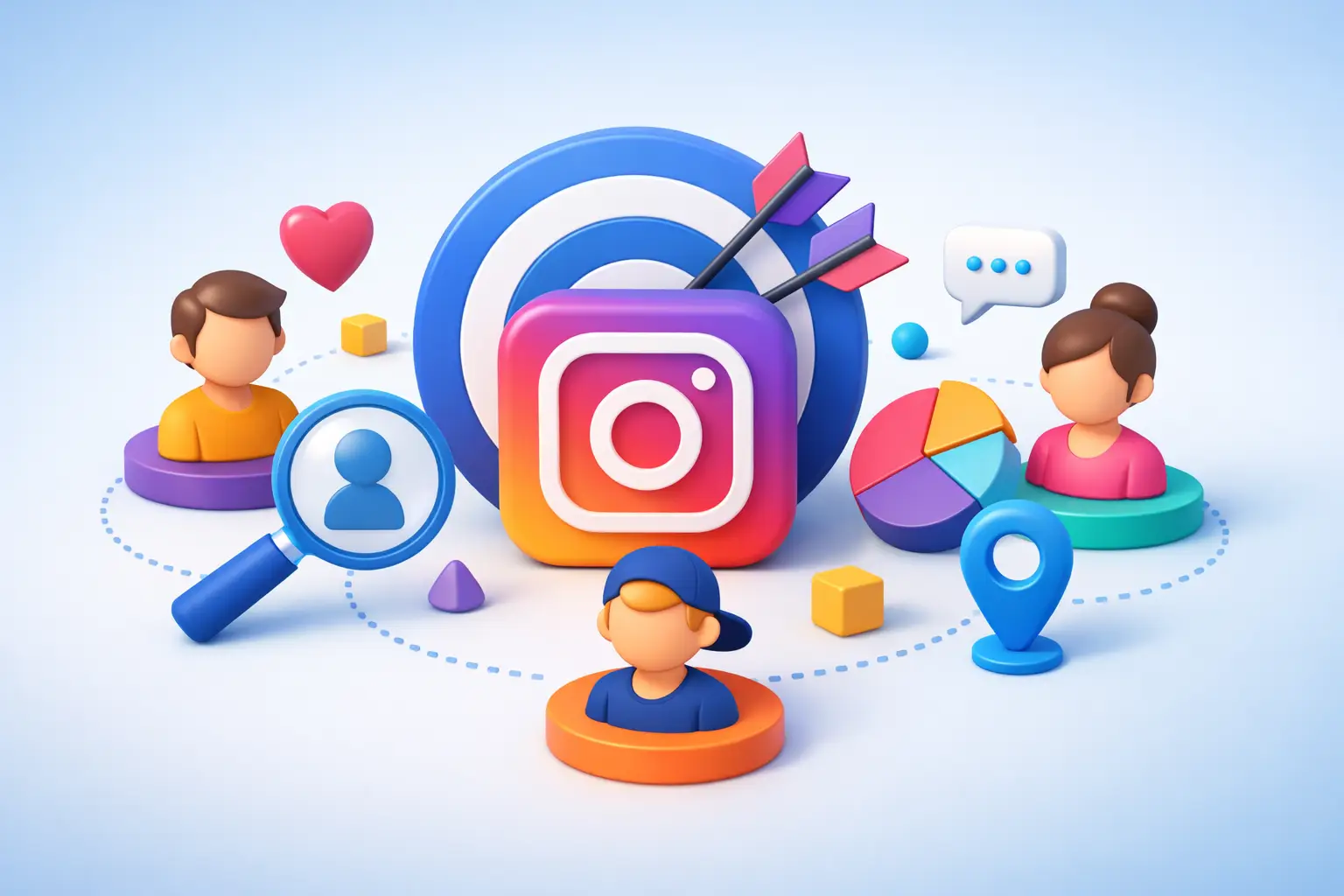
Most businesses do not have an Instagram traffic problem. They have a targeting problem. They post, boost, and test creative for weeks, then realize the offer never reached people who were likely to buy. The right instagram audience targeting strategies fix that fast by shifting your focus from broad visibility to qualified intent.
If your goal is revenue, not vanity metrics, Instagram should be treated like a live prospect database. Every follow, comment, hashtag post, location tag, and competitor interaction tells you something useful about buyer intent. The businesses that win are the ones that turn those signals into action before the opportunity goes cold.
Why most Instagram targeting underperforms
A lot of teams still target Instagram audiences the same way they target cold ad inventory. They build loose interest groups, rely on generic demographics, and hope the algorithm fills in the gaps. That can work for awareness. It is far less reliable when you need pipeline.
The problem is simple. Broad targeting creates broad results. You may get reach, clicks, or engagement, but those metrics do not always map to purchase intent. A local service business does not need random Instagram users. A coach does not need passive followers who like inspirational quotes. An ecommerce brand does not need traffic from people who will never buy at its price point.
Strong targeting starts when you define what audience behavior actually signals commercial value. Once you do that, Instagram becomes easier to work with and far more profitable.
Instagram audience targeting strategies that produce better leads
The best instagram audience targeting strategies are not built around a single audience type. They layer intent, relevance, and timing so you can prioritize people who are more likely to respond.
1. Target competitor audiences first
If someone already follows, likes, or comments on a competitor account, you know two things immediately. They understand the category, and they have some level of interest in the solution. That makes competitor audiences one of the fastest ways to find warm prospects.
This approach works especially well for agencies, consultants, coaches, SaaS companies, and niche ecommerce stores. Instead of trying to educate a cold audience from scratch, you put your offer in front of people who are already paying attention to similar businesses.
There is one trade-off. Not every competitor follower is a buyer. Some are peers, students, or casual observers. That is why this strategy works best when you segment further by engagement type, geography, or offer fit.
2. Go after people who engage, not just people who follow
A follow is useful. An active like, comment, or repeat interaction is better. Engagement usually signals stronger attention, and stronger attention often means higher conversion potential.
For example, if you sell marketing services, a user who comments on posts about lead generation is more valuable than a passive follower of a broad business account. If you sell fitness apparel, someone liking product drops and styling posts may be closer to purchase than someone who followed the brand two years ago and never engaged again.
This is where many teams waste time. They scrape or collect large audiences, then market to everyone equally. That creates noise. Better targeting means ranking people by action. The more recent and specific the action, the stronger the lead.
3. Use hashtag targeting to map niche intent
Hashtags are still one of the clearest ways to identify people grouped around a topic, trend, lifestyle, or business need. The key is to stop thinking about hashtags as a content distribution trick and start treating them as audience clusters.
A wedding photographer can target users posting under location-specific wedding hashtags. A B2B consultant can identify founders participating in startup or ecommerce hashtags. A med spa can look at beauty, skincare, and local lifestyle hashtags to isolate likely prospects.
The catch is relevance. Large hashtags often attract mixed audiences, including spam, creators, and unrelated users. Smaller and mid-volume hashtags are usually more useful because they reveal clearer intent. Precision beats size here.
Build targeting around locations and local buying behavior
For local businesses, location-based targeting is one of the highest-leverage plays on Instagram. People who post from, tag, or engage with specific places are often easier to convert than broad city-level interest audiences.
4. Target by geotagged activity
Restaurants, real estate teams, gyms, salons, event businesses, and local service providers can use geotag behavior to find nearby prospects with real-world relevance. A user posting from a luxury apartment building, coworking space, trade show venue, or neighborhood hotspot is giving you strong contextual data.
That context matters because local buying decisions are often driven by proximity and routine. If you know where your audience spends time, you can build outreach and offers that feel specific instead of generic.
This strategy also helps reduce wasted ad spend. Instead of paying platforms to guess which users in a metro area may care, you start with people who already show visible ties to the places that matter to your business.
5. Segment by audience source before outreach
Not all Instagram leads should receive the same message. Someone found through a competitor follower list is different from someone found through a local hashtag or a location tag. Their awareness level and motivation are not the same.
That is why source-based segmentation matters. If the lead came from a competitor audience, your message can focus on differentiation. If the lead came from a niche hashtag, lead with relevance to that niche. If they came from a location, make the pitch local and practical.
This sounds basic, but it changes response rates. Generic outreach fails because it ignores why the lead was selected in the first place. Better segmentation makes your targeting strategy pay off downstream.
Turn Instagram signals into outbound sales motion
Good targeting is only half the job. You still need a clear path from audience discovery to contact, follow-up, and conversion.
6. Match targeting depth to your sales cycle
If you sell a low-ticket product, you can work with broader audience pools and faster campaigns. If you sell high-ticket services or B2B offers, you need tighter filters and more tailored messaging.
A freelancer selling a $300 service can target a wider set of niche users and test volume. A software company selling annual contracts should narrow by industry, competitor engagement, geography, and behavioral relevance before starting outreach.
This is where many businesses get frustrated. They use shallow targeting for complex offers, then blame the channel when conversion is weak. Instagram can surface strong prospects, but your audience selection has to match the economics of the sale.
7. Combine audience targeting with direct outreach
The biggest missed opportunity on Instagram is stopping at audience research. If you identify a qualified audience and then wait for organic content or paid ads to do all the work, you slow down the sales cycle.
A stronger model is to identify the audience, extract the relevant contact data where appropriate, and move those leads into direct outreach or retargeting workflows. That gives you control over timing, follow-up, and measurement.
For businesses that want speed, this approach is hard to beat. You are no longer dependent on rising ad costs or inconsistent reach. You are building a prospect list based on visible audience behavior, then taking action with a clear sales objective.
A platform like Mailerfind fits naturally into this process because it lets businesses identify Instagram audience segments, organize leads, and activate them through outbound campaigns without adding technical complexity. That matters for teams that need results quickly and do not want another tool that creates extra work.
What to avoid when choosing Instagram audiences
The wrong audience strategy can make even a strong offer look weak. One common mistake is chasing the biggest possible audience. Bigger feels safer, but it usually lowers relevance. Another is treating every engagement signal as equal. A passive follow and an active comment should not carry the same weight.
It is also a mistake to rely only on demographics. Age, gender, and location can help, but they rarely tell the full story. Behavioral signals are often more predictive because they show what people actually pay attention to.
Finally, do not separate targeting from messaging. If your audience was selected because they interact with a competitor, say something that reflects that context. If they were found through a niche hashtag, make the message fit the niche. Relevance is what turns targeting into response.
How to judge whether your strategy is working
The best targeting strategy is not the one that produces the most names. It is the one that produces the best downstream performance. Look at reply rates, booked calls, conversion rates, customer quality, and acquisition cost.
A smaller audience with stronger intent will often outperform a massive list of weak leads. That is especially true for service businesses, agencies, and B2B operators who care more about qualified conversations than surface-level reach.
If results are soft, do not just change the copy. Recheck the audience source, the engagement level, the timing, and the fit between the segment and the offer. Most targeting problems show up later as conversion problems.
Instagram rewards businesses that pay attention to intent. The more precisely you identify who is already signaling interest, the less time you waste trying to convince the wrong people.