
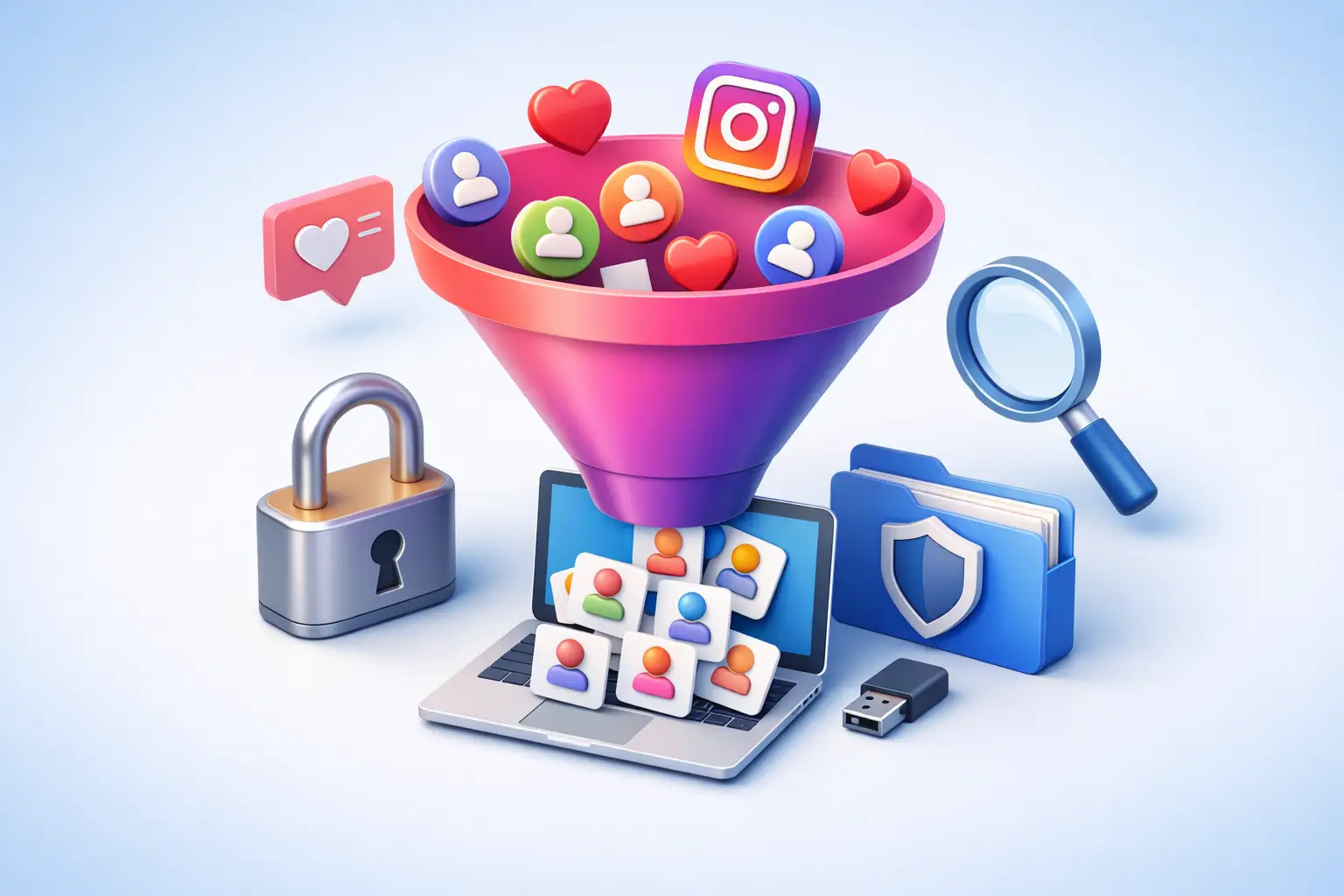
If you’re paying more for clicks every month and still getting weaker leads, you don’t have an ad problem. You have a targeting problem. That is why more businesses are asking how to extract Instagram followers legally – not to cut corners, but to identify publicly visible prospects and move faster than paid channels allow.
The key word here is legally. Plenty of people talk about scraping Instagram audiences as if the only question is whether it works. That is the wrong question. The right one is what data is public, what you are allowed to collect, and how you can use it without crossing privacy or platform lines. If you get that part right, Instagram audience extraction can become a practical lead generation system instead of a compliance risk.
What “how to extract Instagram followers legally” really means
In practice, this means collecting publicly available information from Instagram audiences in a way that respects privacy laws, avoids deceptive access methods, and does not rely on private account intrusion. You’re not breaking into accounts. You’re not pulling private messages. You’re not accessing hidden data. You’re identifying information that users or businesses have made public and organizing it for sales prospecting.
That distinction matters. Public data is not the same as unrestricted data, and legal use depends on both collection method and downstream use. A public Instagram profile may show a username, bio, category, website, follower relationships, location signals, or business contact details. Whether you can use that information for outreach depends on your jurisdiction, your message type, and whether your process aligns with applicable privacy and marketing laws.
For most growth-focused businesses, the safest lane is simple: collect public business-relevant data, use it for legitimate B2B prospecting or clearly relevant outreach, and give recipients a clear way to opt out.
The legal line: public data vs private data
If you’re serious about compliance, you need to separate what is visible from what is protected.
Public data generally includes profile information that anyone can view without special permission, depending on the account’s visibility settings. That can include usernames, display names, bios, follower lists on public accounts, post interactions, hashtags, and public business contact details. Private data includes anything behind restricted access, private profiles, direct messages, login-protected account content obtained improperly, and non-public personal information.
This is where many teams get sloppy. They assume that if a tool can technically pull something, they can legally use it. Not true. The method matters. The data category matters. The use case matters.
If you are extracting followers from a public account to identify potential customers in a niche, that is very different from trying to access hidden data or using personal data in ways that violate anti-spam or privacy rules. Legal prospecting starts with visible information and stays within a reasonable commercial purpose.
How to extract Instagram followers legally without creating unnecessary risk
The cleanest workflow starts with audience selection. Find a relevant public account in your market. That might be a competitor, a complementary brand, an industry publisher, a niche educator, or a local business with the kind of followers you want to reach.
From there, extract public follower data from that account. The goal is not to grab everything possible. The goal is to filter for relevance. If you sell software for gyms, a massive celebrity audience is worthless. A regional fitness supplier, gym consultant, or training franchise is far more useful because the follower base is closer to your actual buyer.
Next, enrich only what you need. In many cases, that means identifying business names, public email addresses, websites, categories, locations, and profile signals that indicate commercial intent. If a profile is clearly personal and unrelated to your offer, skip it. If it’s a business or creator account publicly promoting services, it is generally a stronger fit for lawful, legitimate outreach.
Then segment before you contact anyone. Separate leads by niche, geography, account type, and likely pain point. This is not just better marketing. It also reduces compliance risk because your outreach becomes more relevant and less spammy.
Finally, make sure your outbound process is compliant. That means honest sender identification, no misleading claims, no fake personalization, and a clear opt-out path. Legal extraction is only half the job. Legal use is what protects the business.
What businesses can usually do safely
Most companies using Instagram audience data for lead generation are not trying to become legal scholars. They want a practical rule set. A strong starting point is this.
You can generally work with publicly visible business data for legitimate commercial prospecting when your outreach is relevant and responsibly handled. That often includes identifying public followers of niche accounts, gathering visible business contact details, exporting lead lists for internal sales use, and running segmented outbound campaigns with proper opt-out language.
What gets riskier is mass collection with no relevance filter, contacting consumers with aggressive promotional messaging, storing unnecessary personal data, or ignoring local privacy rules. B2B outreach tends to be more defensible than broad consumer blasting, but even then, relevance and transparency matter.
If your audience includes EU or UK contacts, you need to think more carefully about lawful basis, data minimization, and direct marketing rules. If you’re targeting US businesses, the compliance picture is often more workable, but you still need to follow email and data-use requirements. There is no one-rule-fits-all answer. It depends on who you’re targeting, what data you’re collecting, and how you’re using it.
Why manual extraction is rarely the smart option
You can extract Instagram followers manually. You can copy usernames one by one, open profiles, scan bios, and build a list in a spreadsheet. You can also waste half your week doing work a system should handle in minutes.
Manual collection creates two business problems. First, it is slow and inconsistent. Second, it pushes teams into bad decisions because they get impatient and start collecting irrelevant or questionable data just to speed things up.
A structured tool-based workflow is usually safer because it standardizes what gets collected, reduces human error, and makes segmentation easier. That matters when you’re trying to build a repeatable acquisition channel, not just a one-time list.
For businesses that want speed without technical complexity, this is where a platform like Mailerfind fits naturally. It gives users a way to identify publicly available Instagram audience data, extract leads, and move those contacts into outreach workflows without needing to code, log into Instagram accounts, or stitch together multiple tools.
How to use extracted follower data without ruining deliverability
Getting the data is not the win. Turning it into replies, calls, and sales is the win.
The biggest mistake after extraction is sending the same generic pitch to everyone. That destroys response rates and can create spam complaints. If you found leads through a niche Instagram audience, your message should reflect that context. Speak to what those businesses likely care about. Keep the offer tight. Make the reason for contact obvious.
It also helps to separate cold prospects from warm-enough prospects. Someone following a direct competitor may deserve a different message than someone who only interacted with a broad hashtag. Intent is not equal across all extracted audiences.
Keep your first touch short. Focus on one pain point, one claim, and one next step. If your list quality is strong, you do not need a long email to force interest. Precision beats volume almost every time.
Red flags that mean you’re doing it wrong
If your process depends on accessing private profiles, bypassing restrictions, or collecting data you cannot clearly justify, stop. If you’re scraping giant untargeted audiences because bigger numbers feel better, stop. If you’re sending outreach with no segmentation, weak relevance, or no opt-out, stop.
A legal and effective system is usually narrower than people expect. It favors fit over scale at the beginning. It uses public information only. It keeps records organized. It respects recipient choice. And it treats Instagram extraction as the top of the funnel, not the whole revenue engine.
That trade-off is worth it. Narrower lists with stronger relevance outperform bloated lists that burn domains, waste reps, and create compliance headaches.
The smarter way to think about Instagram audience extraction
The real advantage is not that you can pull follower data. The advantage is that you can identify buyers before they ever click an ad or fill out a form. That gives small teams and lean agencies a direct route to prospecting that is faster, cheaper, and often more precise than waiting for inbound traffic.
If you’re thinking about how to extract Instagram followers legally, think bigger than scraping. Build a system. Start with public data. Filter aggressively. Respect the legal boundaries of collection and outreach. Then use that audience intelligence to start conversations with the right prospects, not just more prospects.
Done that way, Instagram stops being just another social platform and becomes a practical source of pipeline.