
Most businesses do not have an Instagram problem. They have a pipeline problem. They can get views, likes, and even decent engagement, but instagram leads never make it into a reliable sales process. That is where growth stalls.
If you sell a service, run an agency, manage an eCommerce store, or need a steady flow of prospects, Instagram can be more than a content channel. It can be a direct source of qualified buyers. But only if you stop treating it like a popularity contest and start treating it like a prospecting database.
What instagram leads actually are
Instagram leads are not just people who follow your account. They are people or businesses that show buying signals through their behavior on the platform. That can include following competitors, liking niche content, commenting on category-specific posts, using relevant hashtags, appearing in location-based audiences, or matching a specific business profile.
This matters because intent on Instagram is often visible before a prospect ever fills out a form. A person who engages with posts about real estate investing, skincare routines, gym transformations, SaaS growth, or local wedding planning is giving you useful context. That context helps you target faster and pitch with more relevance.
The mistake most businesses make is assuming all engagement is equal. It is not. A random follower with no commercial fit is noise. A person who repeatedly interacts with accounts tied to your niche is a lead worth qualifying.
Why instagram leads can outperform paid traffic
Paid ads still have a place, but they are getting more expensive, more crowded, and less forgiving. If your economics are tight, you can burn budget testing audiences that never convert. Organic content has the opposite problem. It is cheaper, but slow, and results are inconsistent.
Instagram lead generation sits in the middle. You are not waiting months for reach, and you are not forced to pay for every impression. You are identifying people who already cluster around the market you want, then moving them into a controlled outreach process.
That does not mean every niche will perform the same way. Visual categories, local services, coaching, education, beauty, fitness, creator tools, and trend-driven products often have strong Instagram signal. If your audience is highly active elsewhere, like LinkedIn or niche communities, Instagram may work better as a supporting channel than a primary source. The point is not to force one platform to do everything. The point is to use the signal where it is strongest.
Where to find better instagram leads
The quality of your results depends on where you source prospects. Broad targeting creates broad waste. Precision gives you better reply rates, lower acquisition costs, and fewer dead-end conversations.
Competitor audiences
People who follow or engage with your competitors are often the fastest starting point. They already understand the category, and in many cases they are actively comparing options. This is useful for agencies, consultants, local services, and product brands that serve a defined niche.
There is a trade-off here. Competitor audiences can be high intent, but they can also be over-targeted if everyone goes after the same visible accounts. That is why smaller competitor pages and niche-specific creators can sometimes outperform the biggest names in your space.
Hashtag and content engagement
Hashtags, post likers, and commenters reveal active interest. Someone posting under a specific hashtag or repeatedly engaging with category content is not just passively browsing. They are participating.
This is where context matters. A hashtag like #smallbusinessowner is too broad for most campaigns. A narrower tag tied to a service, product type, city, or use case is usually more valuable. The tighter the commercial intent, the better.
Location-based audiences
For local businesses, geography can beat scale. Restaurants, gyms, clinics, salons, realtors, event vendors, and local agencies can pull highly relevant instagram leads from users tied to specific places. That includes tagged locations, local business audiences, and nearby interest clusters.
The big advantage is obvious. You are talking to people who can actually buy from you. The downside is volume. Local targeting is usually more qualified, but smaller. That is often a good trade if your close rate is strong.
How to qualify instagram leads before outreach
A list is not a pipeline. Before you send a single message or email, qualify your prospects.
Start with fit. Are they in your target market, budget range, geography, and use case? Then look at intent. Have they engaged with accounts, topics, or behaviors that suggest interest now rather than someday? Finally, check reachability. Can they be contacted through publicly available details or matched to an outbound workflow you can actually execute?
This step saves money and protects your sender reputation. It also sharpens your message. A cold email to a Shopify brand owner is different from a cold email to a fitness coach, even if both were sourced from Instagram activity.
The strongest campaigns segment before they send. If you lump followers, likers, commenters, and hashtag participants into one generic pitch, performance drops. If you break them into smaller audience groups with clear buying signals, conversion gets much easier.
Turning instagram leads into outreach-ready data
This is the part where many teams get stuck. They know the audience exists, but they do not have a workable process for turning Instagram activity into usable contact data and campaigns.
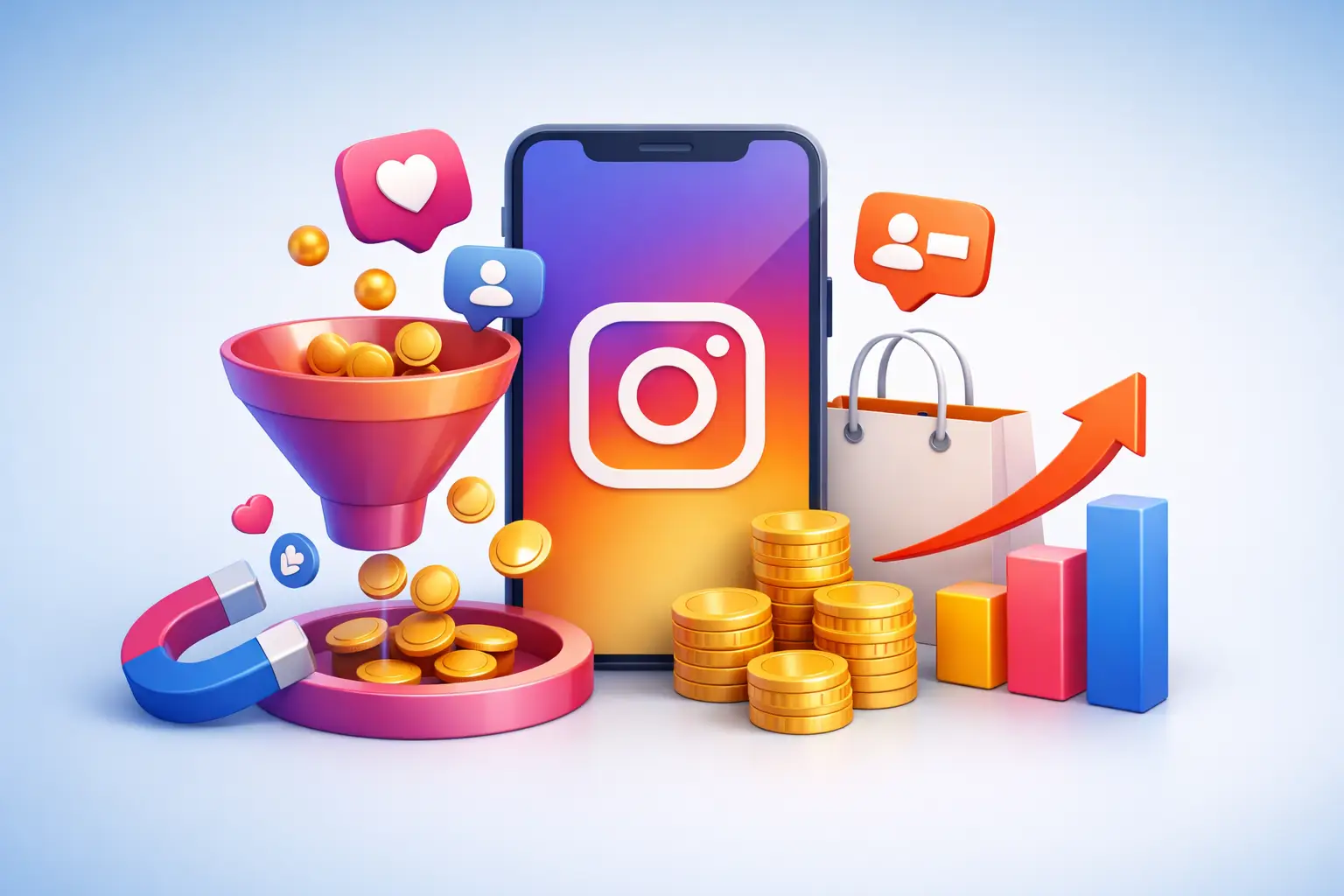
The practical workflow is simple. First, define the audience source. That might be a competitor account, a niche hashtag, a set of local businesses, or a relevant creator community. Next, extract and organize the lead data based on your targeting criteria. Then enrich or sort that data so you can separate high-fit prospects from low-fit ones. After that, move those leads into email or ad-based follow-up.
This is why end-to-end tools matter. If you have to juggle multiple platforms, copy data manually, and write every campaign from scratch, speed disappears. A system like Mailerfind is built for exactly this use case: finding publicly available Instagram audience data, organizing it into prospect lists, and activating those leads through outbound workflows without adding technical friction.
How to contact instagram leads without wasting time
Most outreach fails because it is lazy. The message is either too generic or too aggressive.
A better approach is simple. Lead with relevance, not hype. Show that you understand who the prospect is, what market they are in, and why your offer fits. Keep the first message short. Give them a reason to reply without forcing a big commitment.
For example, if you target gym owners who engage with boutique fitness accounts, your angle should reflect growth, retention, local acquisition, or class bookings. If you target eCommerce founders following skincare competitors, your angle should speak to product demand, repeat purchase potential, or margin efficiency.
Do not over-personalize every line if it kills your volume. Do not over-automate either if it makes your outreach sound fake. The right balance depends on list size, ticket value, and how specific your offer is.
Email usually scales better than DMs
Instagram DMs can work, especially for creators, local businesses, and lower-volume offers. But email gives you better structure, easier follow-up, stronger testing, and more room to build a repeatable system.
If you are serious about sales, you need more than one touchpoint and one chance. Email lets you run sequences, track response patterns, test subject lines, and improve over time. DMs are useful. Email is usually more operational.
Common mistakes that kill conversion
The first mistake is chasing volume instead of relevance. Ten thousand weak leads are less useful than two hundred qualified ones.
The second is using one message for every segment. Different Instagram behaviors signal different levels of awareness and intent. Your messaging should reflect that.
The third is expecting instant sales from cold traffic. Some instagram leads are ready now. Others need a few touches, a clearer offer, or stronger proof. Follow-up is not optional.
The fourth is ignoring compliance and process. Publicly available data still needs to be handled responsibly. You need clean targeting, clear messaging, and a system that keeps outreach organized instead of chaotic.
Building a repeatable instagram leads system
If you want Instagram to produce revenue consistently, stop treating lead generation as a one-off tactic. Build a system.
Choose two or three audience sources that align with your offer. Segment them by fit and intent. Run outreach in controlled batches. Track reply rates, positive responses, booked calls, and closed revenue. Then cut weak segments and scale the ones that convert.
That is how Instagram becomes useful beyond content. Not as a vanity platform, but as a prospecting engine with measurable output.
The businesses that win here are not the loudest. They are the most precise. If you can identify the right people, contact them with a relevant offer, and follow up with discipline, instagram leads stop being social activity and start becoming sales opportunities.