
Most agencies do not have an outreach problem. They have a workflow problem. If you need an agency outreach workflow example that actually produces replies and booked calls, the fix is rarely more volume. It is better targeting, tighter messaging, faster follow-up, and a system your team can run every week without guessing.
That matters because outreach breaks in quiet ways. Leads get pulled from the wrong audience. Copy sounds generic. Follow-ups stop after one email. No one updates the CRM. Then the agency decides cold outreach does not work, when the real issue is that the process was loose from the start.
A practical agency outreach workflow example
Here is a simple version built for small to mid-sized agencies that want predictable pipeline without relying only on referrals or rising ad costs. The model works especially well for service businesses selling retainers, audits, creative services, lead generation, web design, paid media, or consulting.
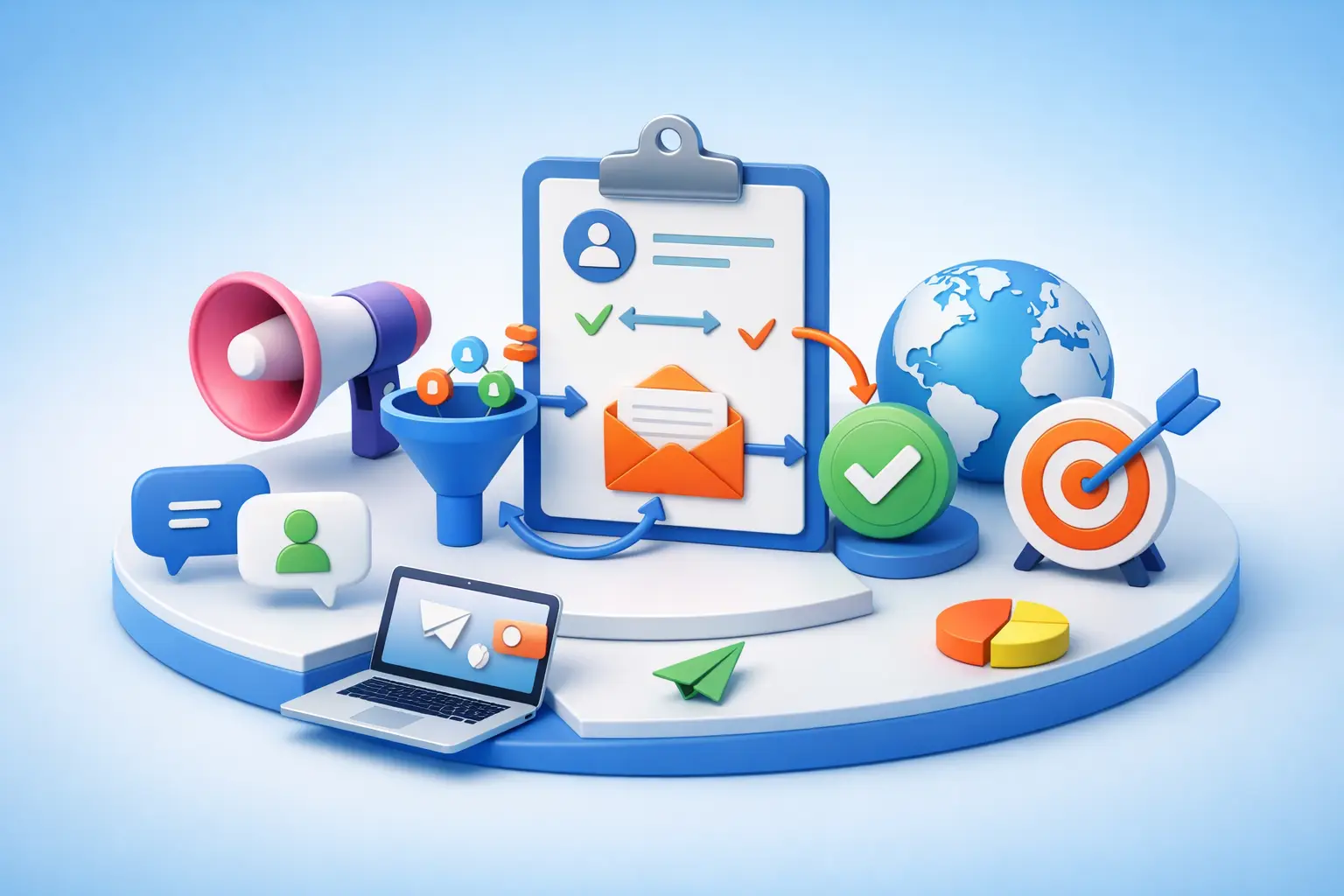
The workflow has five parts: define the niche, build the list, segment the leads, launch outreach, and review performance weekly. That sounds basic, but execution is where agencies either waste money or create momentum.
Step 1: Pick one niche and one offer
Start narrower than you think you need to. If your agency says it serves everyone, your outreach will sound like it was written for no one. A better setup is one niche, one pain point, and one offer.
For example, instead of saying, “We help businesses grow online,” say, “We help med spas turn Instagram engagement into booked consultations.” That gives your prospect a reason to pay attention. It also makes your lead sourcing cleaner because you know exactly who you are looking for.
Your offer should match the buying stage. A full retainer pitch can work, but often a lower-friction entry point gets better response rates. Think free audit, campaign teardown, prospect list sample, landing page review, or account growth diagnosis. The goal is not to explain everything your agency can do. The goal is to earn the next conversation.
Step 2: Build a list from relevant audience signals
This is where many agencies sabotage the campaign. They buy a broad list, scrape random contacts, or pull outdated company data that has no connection to actual intent. Then they wonder why open rates and reply rates are weak.
A stronger approach is to source leads from audience behavior tied to your niche. If you sell services to fitness studios, for example, look at followers of fitness software brands, commenters on industry creators, users posting under local fitness hashtags, or audiences engaging with competing businesses. These are not perfect buying signals, but they are much better than generic databases with no context.
That is one reason tools like Mailerfind are attractive for agencies. You can identify public Instagram audiences around a niche, turn that activity into contactable prospects, and move directly into outreach without stitching together five different systems. The main benefit is speed, but the real advantage is relevance.
As you pull leads, collect a few useful fields beyond name and email. Save business name, niche tag, source, location, and one short personalization note. That note can be as simple as “active on local hashtag” or “engages with competitor account.” You do not need a research dossier. You need enough context to write a message that feels intentional.
How to structure the outreach sequence
Once the list is built, segment it before you send anything. A dentist in Miami and a med spa in Dallas may both be local service businesses, but if your copy treats them the same, response quality drops. Segment by niche first, then by geography or audience source if needed.
Your first campaign should be short and controlled. Fifty to 150 leads per segment is enough to learn quickly without creating chaos. If you send to 5,000 contacts before testing the offer and copy, you are scaling mistakes.
Step 3: Write messages that sell the next step
The best outreach emails are not clever. They are specific. They show the prospect why you reached out, what problem you solve, and what small action makes sense next.
A basic first email can follow this pattern: reason for contact, observed opportunity, simple offer, and soft call to action. For example, if you are targeting eCommerce brands with strong Instagram engagement but weak email monetization, your message might mention that you noticed active audience engagement and offer a quick teardown of how that traffic could convert into more owned leads and repeat revenue.
Keep it short. Most agency outreach fails because the sender tries to close a retainer in the first email. That is too much pressure for a cold contact. The first job is to start a relevant conversation.
Follow-up emails should not just repeat the first message with “checking in.” Add a new angle. In one follow-up, mention a common mistake in their category. In another, offer a quick benchmark or observation. In the last touch, give them an easy out while keeping the door open. Respectful persistence performs better than fake urgency.
A sample 4-touch sequence
Email one introduces the opportunity and the offer. Email two highlights a likely gap, such as poor lead capture, weak follow-up, or underused social engagement. Email three shares one specific idea they could apply. Email four closes the loop and asks whether timing is the issue or if it makes sense to reconnect later.
That is enough for most agencies starting out. Longer sequences can work, but only if the list quality and offer quality are there. More touches do not rescue weak targeting.
The operational side most teams skip
A real agency outreach workflow example needs more than copy. It needs ownership. If no one is clearly responsible for list quality, campaign launch, inbox management, and reporting, the process becomes inconsistent fast.
Step 4: Assign roles and response rules
Even a two-person team can run outreach cleanly if roles are clear. One person sources and tags leads. One person reviews messaging and handles replies. If the same person does both, that is fine, but the responsibilities still need to be defined.
Set response-time rules. New positive replies should get a same-day answer when possible. Warm interest goes cold quickly when agencies take two or three days to respond. Use simple categories such as interested, not now, not relevant, and bad contact. This keeps reporting honest and follow-up decisions easy.
Also decide what counts as a qualified lead. For one agency, that might be any business owner open to a 15-minute audit call. For another, it might be a brand already spending money on acquisition. Without a qualification rule, teams celebrate replies that never become revenue.
Step 5: Review performance every week
You do not need a giant dashboard. Track sends, delivery, opens if available, positive replies, meetings booked, and opportunities created. Then review by segment. Which niche responded best? Which source produced the strongest conversations? Which offer led to calls instead of polite replies?
This is where outreach becomes a repeatable channel instead of a random experiment. If med spas in Texas respond at 4 percent and ecommerce apparel brands respond at 0.8 percent, that is not just a metric. It is a strategic decision. Shift effort toward what is producing traction.
The trade-off is that narrower campaigns often produce fewer leads at the top, but much better conversion later. Broad campaigns can make the spreadsheet look busy while pipeline stays weak. Agencies that care about revenue learn to prefer quality over vanity volume.
Common mistakes inside an agency outreach workflow example
The biggest mistake is treating lead generation and outreach as separate projects. They are one system. If your list source is vague, your copy gets vague. If your offer is weak, your follow-ups become pushy. If your tracking is messy, you cannot improve.
Another common mistake is over-personalizing too early. Personalization helps, but it should be scalable. You do not need to spend 10 minutes researching every prospect for a cold email that may never be opened. Usually one relevant trigger and one sharp offer are enough.
There is also the compliance and reputation side. Agencies should only use publicly available data, stay transparent in messaging, and make opting out easy. Short-term aggression can damage long-term sending performance. Smart outreach is disciplined outreach.
When this workflow works best
This model works best when your agency has a clear niche, a concrete outcome, and a team that can follow process. It works less well if your service is vague, your target market keeps changing, or you cannot handle replies quickly.
It also works better when your prospecting source matches your service. If you sell Instagram-focused growth or conversion services, sourcing from active Instagram audiences makes obvious sense. If you sell enterprise cybersecurity consulting, that same source may be less direct. The workflow stays useful, but the lead source should fit the offer.
A good outreach system gives your agency control. You are no longer waiting for referrals, algorithm changes, or ad prices to cooperate. You are creating a direct path from identified prospects to real sales conversations. That is what makes the difference between occasional outreach and a real pipeline engine.
If you want this to work, keep it simple enough to repeat, tight enough to measure, and focused enough to matter to the person reading the email.