
A post gets a few hundred likes from exactly the kind of people you want as customers, and then most businesses do nothing with that signal. That is the real opportunity behind export Instagram likers emails. If someone is already engaging with content in your niche, you are not starting from zero. You are starting with intent.
For founders, agencies, consultants, and eCommerce teams, that matters because attention on Instagram is expensive to earn and even harder to convert. Likes are not revenue by themselves, but they are one of the clearest signs of audience fit. The smarter move is to turn those engaged users into a prospect list you can actually work with through email outreach, segmentation, and follow-up.
Why export Instagram likers emails matters
Most customer acquisition channels break down in one of two ways. They are either too broad, like paid ads targeting interest groups that only loosely match your buyer, or too slow, like waiting for organic content to compound over months. Instagram likers sit in a better position. They have already raised their hand around a topic, brand, creator, or offer.
That does not mean every like is a sales lead. Some are casual users. Some are competitors. Some will never buy. But compared with a cold list built with no intent signal, this audience usually gives you a better starting point. You can filter by niche, geography, profile quality, and campaign relevance before you send a single message.
This is why businesses that care about pipeline, not vanity metrics, keep coming back to audience-based prospecting. It cuts wasted spend. It gives you a warmer angle for outreach. And it lets you build a list from real engagement instead of assumptions.
What “export Instagram likers emails” actually involves
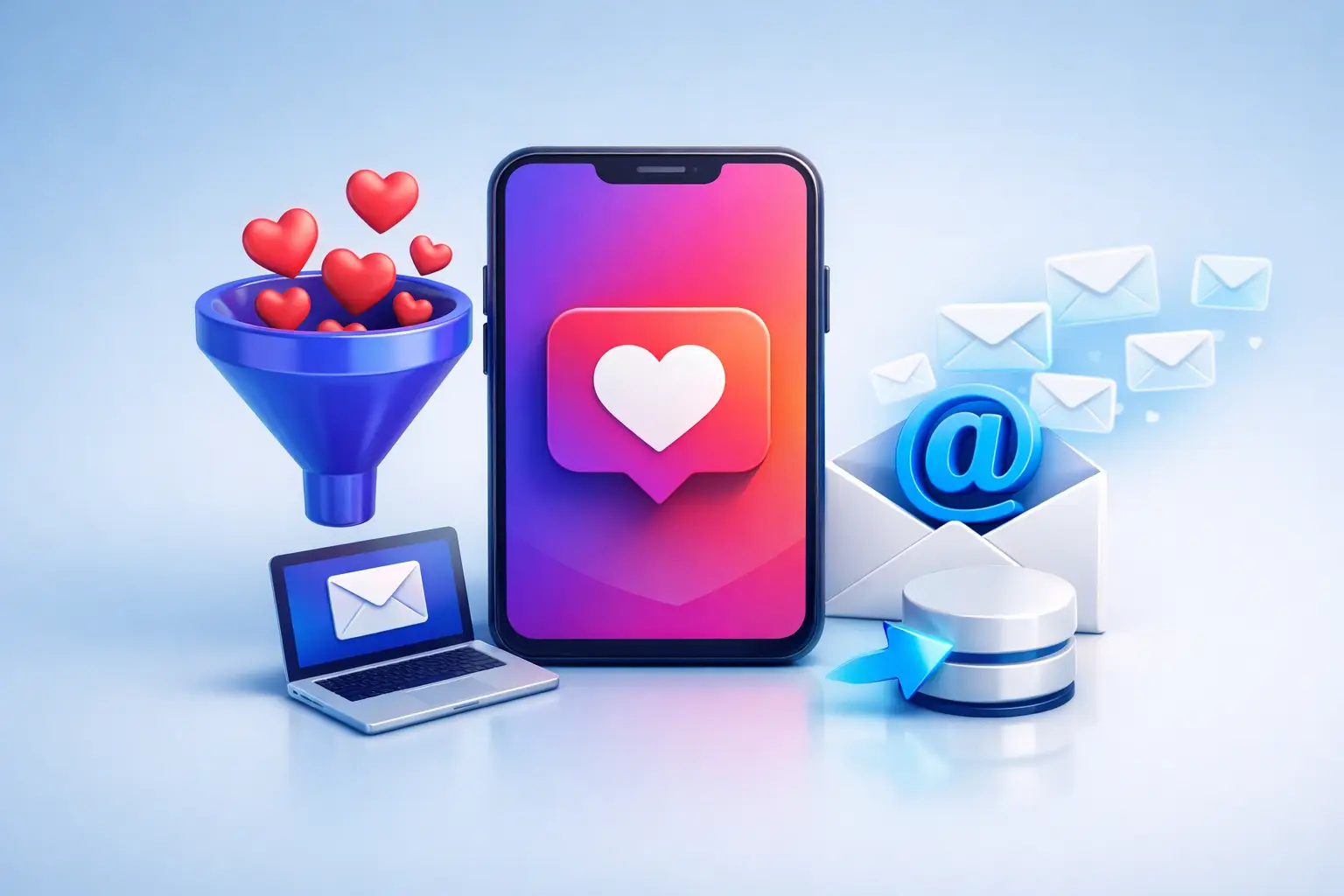
When people say they want to export Instagram likers emails, they usually mean something more practical than the phrase suggests. They are not pulling email addresses directly from likes inside Instagram. They are identifying users who liked relevant posts, extracting publicly available profile data, and then enriching those profiles into usable contact records where possible.
That distinction matters. The workflow is not magic, and it is not random scraping for the sake of volume. It is targeted prospecting built on engagement data. First you choose a post or account whose audience overlaps with your ideal customer. Then you collect the users who liked that content. After that, you qualify the profiles and export the contact data that is publicly available or matched through compliant enrichment methods.
The result is not just a spreadsheet. It is a prospecting asset. If the data is clean and the targeting is tight, you can move straight into outreach instead of spending days building a list manually.
The right way to build a list from Instagram likers
Start with the source. The best posts to mine are not always the most viral ones. A huge entertainment account may generate thousands of likes and almost no buyer intent. A niche creator, local business, educator, or competitor post with a smaller but more focused audience can outperform it by a mile.
Think about commercial relevance first. If you sell beauty services, likers on posts from salons, makeup artists, and skincare educators are more useful than generic lifestyle audiences. If you run an agency for real estate professionals, engagement on realtor coaching pages or local property content is far stronger than broad business motivation posts.
After that, qualify the audience. Good filtering saves you from bad outreach. Look at geography if your offer is location-specific. Look at business type if you are selling B2B. Look at profile signals like job role, niche keywords, website presence, and posting behavior. The goal is not to collect the biggest list. The goal is to collect the list most likely to convert.
Then comes export and activation. Once the likers have been turned into contact records, segment them before sending anything. New prospects should not get the same message as warm niche leads. Local buyers should not get a generic pitch if a location-specific angle would work better. A lot of campaign performance is won or lost at this step.
Where most businesses go wrong
The biggest mistake is treating every liker as equal. They are not. A person who liked a meme on a large page is different from a business owner who regularly engages with content in your category. If you skip qualification, your reply rates drop and your sender reputation can take the hit.
The second mistake is overpersonalizing too early. You do not need a novel in the first email. You need a relevant reason for outreach. Mentioning the market they operate in, the type of content they engage with, or the problem you solve for similar businesses is usually enough. Keep it tight and commercial.
The third mistake is relying on one audience source. Instagram likers are powerful, but they work best when combined with other signals. Commenters, followers, hashtag participants, and users engaging with competitor pages often create a stronger prospect pool together than any one source alone.
How to use exported liker data without wasting it
Once you export the list, speed matters. Engagement signals get stale. If someone liked relevant content this week, that is a better opening than waiting a month and sending the same generic pitch later.
This is where a simple outbound workflow wins. Segment the list, write one message for each clear audience type, and launch quickly. If you are targeting coaches, your angle might be client acquisition. If you are targeting eCommerce brands, your angle might be repeatable revenue without rising ad costs. If you are targeting local businesses, your angle might be direct lead generation from audiences already active in their market.
Keep your first message focused on one business outcome. More leads. Lower acquisition cost. Faster prospecting. Better fit than paid traffic. You are not trying to explain your whole service in one shot. You are trying to start a reply.
Then follow up. Most sales from outbound do not come from the first email alone. A short second or third touch often does more than the opener, especially if you tighten the value proposition and remove fluff.
Is it legal and safe?
This is where serious operators separate themselves from reckless ones. If you want to export Instagram likers emails and use that data for outreach, the process has to be grounded in publicly available information, responsible data handling, and compliant sending practices. You are building a prospecting system, not gambling with your domain or reputation.
It also depends on your market and how you plan to contact leads. B2B outreach often has more room than consumer outreach, but that does not mean anything goes. Relevance, transparency, and proper opt-out behavior are basic requirements if you want this channel to stay profitable.
Operational safety matters too. Businesses want tools that do not force technical workarounds or risky account behavior. That is one reason browser-based systems with guided workflows are attractive. They reduce friction and let teams move faster without turning list building into a technical project.
When this strategy works best
This approach tends to work especially well when your buyers are active on Instagram and your offer has a clear commercial use case. Agencies, freelancers, consultants, educators, software sellers, and niche eCommerce brands often get strong results because they can identify relevant communities fast and speak to a defined problem.
It is less effective when the audience signal is weak or the offer is too broad. If you cannot tell who your buyer is from the pages they engage with, your targeting will be muddy. In that case, fix the audience definition first. Better inputs beat more automation every time.
For businesses that want a direct path from social engagement to pipeline, platforms like Mailerfind make the workflow practical. Instead of manually hunting through likes, guessing who fits, and stitching together separate tools for list building and sending, you can go from audience extraction to outreach in one motion. That is the difference between a tactic you try once and a channel you can scale.
A smarter way to think about Instagram likes
An Instagram like is not just engagement. It is a filter. It tells you who is paying attention to a topic, brand, or offer close to your market. If you treat that signal seriously, you can build prospect lists that are tighter, cheaper, and easier to convert than most cold data sources.
The real edge is not in exporting data for the sake of it. It is in turning attention into action while the signal is still fresh. Start with the right audience, qualify hard, send relevant outreach, and let the market tell you where the next sales opportunity is hiding.