
Most businesses do not have a lead problem. They have a channel problem. They keep paying more for forms, clicks, and vague audience targeting when the real question is simpler: in instagram scraping vs lead ads, which method gives you more qualified prospects for less money and more control?
That question matters if you are running a small business, an agency, a coaching offer, a local service, or an eCommerce brand with limited budget. Every dollar tied up in inefficient acquisition is a dollar you cannot reinvest in outreach, sales, or fulfillment. The gap between a good channel and a bad one gets expensive fast.
Instagram scraping vs lead ads: the core difference
At a high level, these two methods solve different problems.
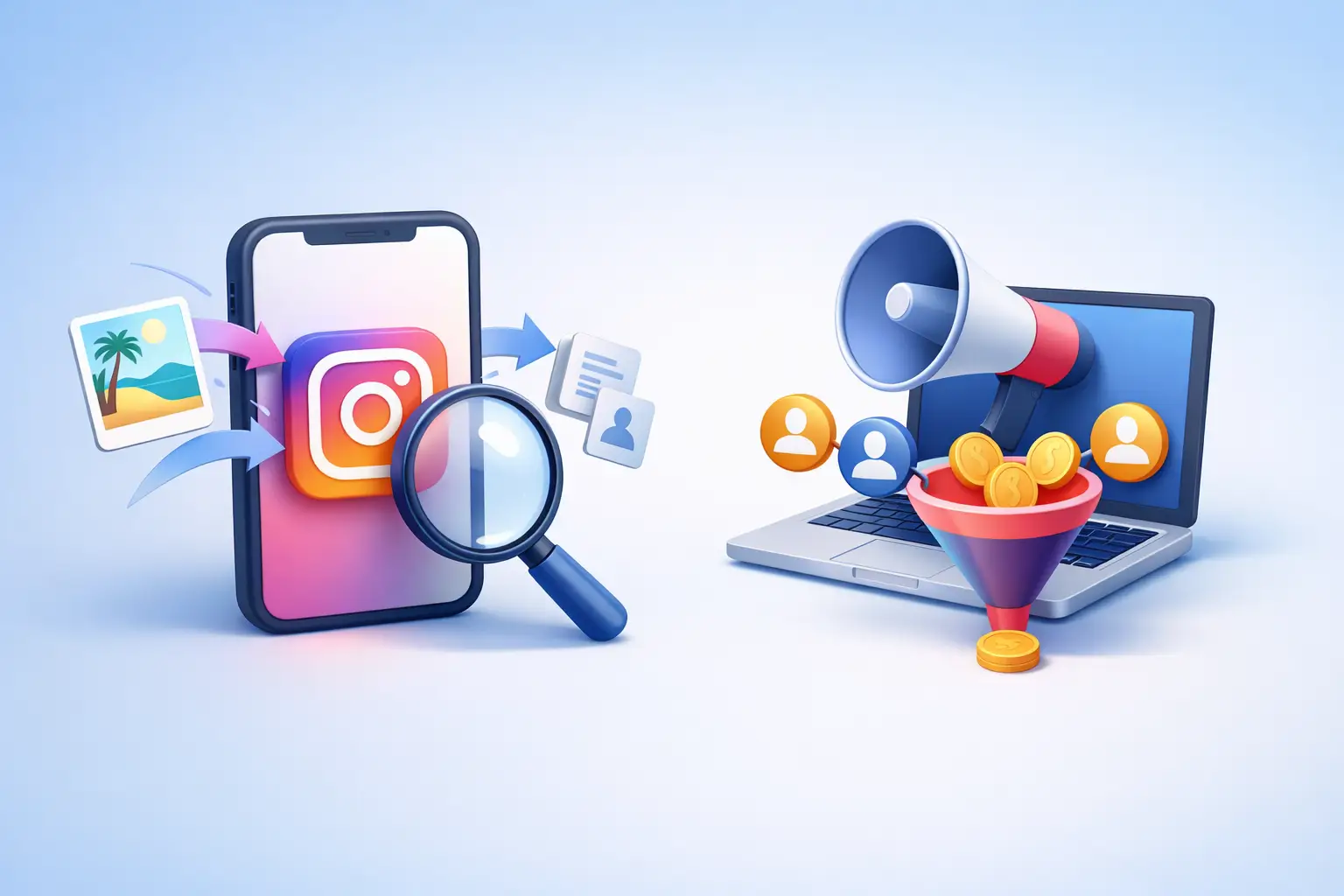
Instagram lead ads are a paid acquisition system inside Meta. You build an audience, launch a campaign, and ask users to submit their information through an in-platform form. You are renting attention and hoping your targeting, creative, and offer are good enough to convert it.
Instagram scraping is a prospecting method. Instead of waiting for people to fill out a form, you identify relevant Instagram users based on signals like followers, commenters, likers, hashtags, locations, or competitor audiences, then turn those public audience segments into outbound opportunities.
That difference changes everything. Lead ads are passive and ad-dependent. Scraping is active and list-dependent. Lead ads require the platform to deliver the right people at the right price. Scraping lets you define who matters first, then contact them directly.
Neither is universally better. But for businesses that care about cost control, targeting precision, and immediate pipeline creation, the trade-offs are not equal.
Cost is where the split becomes obvious
Lead ads can work well when your economics are strong. If your average customer value is high enough, paying premium rates for impressions and form submissions can still make sense. The problem is that most advertisers are not buying leads in a vacuum. They are buying against competition, ad fatigue, creative burnout, rising CPMs, and form abandonment.
That means your actual cost is not just the price per lead. It is the price of testing creatives, managing campaigns, filtering junk submissions, and replacing underperforming funnels. Cheap-looking leads often become expensive once your sales team starts sorting through low intent contacts.
Instagram scraping shifts the spend. Instead of putting most of your budget into media, you invest in data extraction and outreach execution. That often creates a lower cost path to first contact, especially when you already know what kind of audience buys from you.
If you sell to a clear niche – fitness studios, real estate agents, Shopify brands, coaches, salons, local restaurants, creators, dentists – scraping usually gives you a faster route to a workable list than running broad paid campaigns and hoping the algorithm finds the same people.
Lead quality depends on intent, not just capture method
A common argument for lead ads is that people opt in voluntarily, so the leads must be better. Sometimes that is true. If your ad is highly specific and your form sets clear expectations, opt-in leads can carry strong intent.
But a form fill is not the same thing as buying intent. Many users submit because the form is easy, the offer is vague, or they are curious in the moment. Sales teams know this pattern well. Plenty of lead ads generate names, not conversations.
Scraped leads are different. They are not hand-raisers by default. They are selected because they match a profile or behavior. That sounds colder, and it is. But cold does not mean unqualified.
If someone follows three competing brands, comments on posts in your niche, uses relevant hashtags, or shows up in a location tied to your market, that is commercial signal. In many cases, it is a stronger targeting input than broad interest categories inside ad platforms.
The quality question is really about message match. If you scrape a relevant audience and contact them with a specific offer, you can produce higher-quality conversations than a generic lead ad campaign. If you scrape sloppy lists and send weak outreach, you will get weak results. The same applies to ads.
Speed favors scraping when you need pipeline now
Lead ads are often sold as fast because setup is simple. Build a campaign, write a form, launch, and wait for submissions. But that version leaves out the testing cycle. Most campaigns need budget, optimization, and enough data to stabilize before they become predictable.
That is fine if you have time and ad experience. It is less fine if you need qualified prospects this week.
Instagram scraping is usually faster to activate because the work starts with audience identification, not campaign learning. You can define a niche, pull a targeted segment, and move directly into outreach. For founders, freelancers, and agencies trying to fill calendars without waiting for ad performance to improve, that speed matters.
This is one reason tools like Mailerfind appeal to operators who care about direct response. The value is not just getting data. It is shortening the path from audience research to a sales conversation.
Control is the real advantage in instagram scraping vs lead ads
The biggest reason many businesses move away from lead ads is not cost alone. It is dependence.
With lead ads, Meta controls delivery, pricing, audience expansion, and platform conditions. Even when results are good, you are still operating inside a system you do not own. Performance can change because competition increases, policies shift, or creatives burn out.
With scraping, you control the targeting logic. You decide whether to source users from competitor followers, post engagers, hashtag communities, or local audiences. You decide how narrow or broad the list should be. You decide how outreach happens next.
That level of control is useful for businesses that want repeatable acquisition instead of campaign roulette. It also creates operational clarity. When results improve, you can usually point to better targeting, stronger copy, or tighter segmentation rather than guessing what changed in the ad auction.
Compliance and risk need a realistic view
This topic should be handled honestly because businesses do not need hype. They need workable decisions.
Lead ads feel safer because they happen inside a major platform with built-in consent mechanics. That lowers perceived risk and makes them attractive for teams with strict internal approval processes.
Scraping raises more questions, especially around data sourcing, usage, and outreach practices. The key issue is how the data is collected and how it is used. Businesses should work with tools that focus on publicly available information, clear guidance, and compliant workflows rather than shady automation or account-compromising tactics.
The right takeaway is not that one method is safe and the other is dangerous. It is that execution matters. A well-run outbound process built on public data and responsible messaging can be a serious acquisition channel. A careless one can create unnecessary problems.
When lead ads make more sense
Lead ads are still a strong option in a few situations. They fit businesses with proven creative, healthy margins, and offers that convert well from low-friction form fills. They also make sense when you need platform-native attribution, broad top-of-funnel volume, or a more familiar approval path for internal teams.
If your brand already wins on paid social and you have the budget to keep testing, lead ads can scale. They are especially useful when the audience is broad and the purchase decision is simple enough to start with an ad and a form.
When scraping makes more sense
Scraping usually wins when your audience is identifiable, your budget is tighter, and you care about precision over passive volume. It is a better fit when you can describe your buyers clearly and find them through the accounts they follow, the content they engage with, or the markets they operate in.
It also makes more sense when you want to build outbound motion instead of relying entirely on inbound form submissions. Agencies, consultants, B2B service providers, local operators, and niche eCommerce brands often benefit most because they do not need millions of impressions. They need the right people.
The smartest move is often not either-or
For many businesses, the real answer is not choosing one forever. It is sequencing them properly.
Use scraping when you need targeted lists, fast outreach, and direct sales activity. Use lead ads when you have a validated offer worth scaling with paid traffic. In practice, scraping can help you prove audience fit and message fit before you put serious money into Meta campaigns.
That order matters. If you cannot convert targeted outreach to a clearly relevant audience, lead ads will not magically fix the offer. Paid traffic amplifies what already works. It does not rescue weak positioning.
So if you are deciding between instagram scraping vs lead ads, start with the channel that gives you more control, faster feedback, and lower wasted spend. For most growth-focused operators, that means identifying qualified prospects first and building pipeline directly. Once the economics are clear, paid ads become a scale tool instead of a guessing game.
The best acquisition system is the one that puts you closer to the buyer, not farther from the result.