
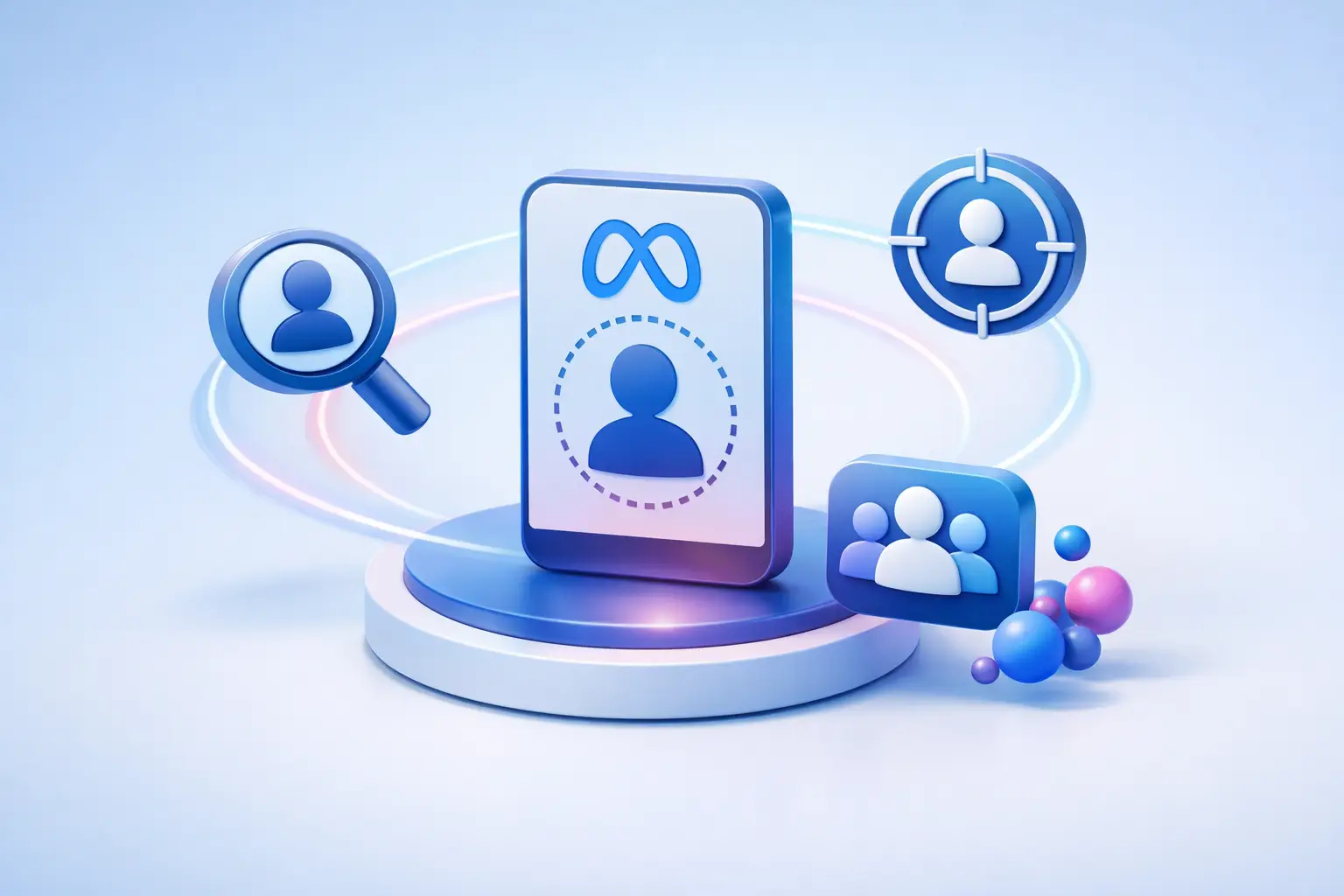
Most ad accounts do not have a traffic problem. They have an audience quality problem. If you want to build Meta custom audiences that actually convert, the job is not just uploading a list and hoping the algorithm figures it out. The real win comes from feeding Meta cleaner intent signals, tighter segments, and better timing so your campaigns reach people who are more likely to buy.
That matters even more now that cold traffic is expensive, broad targeting is unpredictable, and small mistakes in audience setup can burn budget fast. A custom audience is not magic. It is a targeting tool. Used well, it sharpens acquisition. Used poorly, it just gives you a more organized way to waste money.
Why businesses build Meta custom audiences in the first place
Meta custom audiences let you target people who already know your business, have interacted with your brand, or match a list you already own. That can include email subscribers, website visitors, video viewers, lead form users, and customer files.
For most businesses, the appeal is simple. You stop advertising to everyone and start advertising to people with a reason to care. That usually means lower wasted spend, stronger click-through rates, and a better shot at conversion.
But there is a trade-off. Smaller audiences are more precise, yet they can limit scale. Larger audiences give Meta more room to optimize, but they often dilute intent. The right setup depends on your sales cycle, your offer, and how warm the audience really is.
The main audience types inside Meta
Before you build anything, you need to know which source makes sense for your campaign goal.
Customer list audiences
These are built by uploading contact data such as email addresses or phone numbers. They are useful when you already have leads, prospects, or customers and want to retarget them with ads. This is often the fastest route if you have outbound lists, webinar leads, newsletter subscribers, or CRM records.
The strength of a customer list audience is control. You decide who goes in. The limitation is match quality. If your list is old, incomplete, or poorly segmented, performance drops quickly.
Website custom audiences
These audiences are built from people who visited your site or took specific actions, assuming your tracking is set up correctly. They work well for cart abandonment, product page retargeting, and re-engagement campaigns.
They are powerful, but they depend on traffic volume. If your site does not get enough qualified visitors, these audiences may be too thin to scale.
Engagement audiences
These include people who engaged with your Facebook page, Instagram account, videos, forms, or ads. They are useful when your social content gets attention but visitors are not converting on the first touch.
This audience type is often underestimated. Someone who watched 75 percent of a video or opened an instant form has shown more intent than a casual post liker.
How to build Meta custom audiences the right way
The mechanics inside Ads Manager are straightforward. The real edge comes from what you upload and how you segment it.
Start in Audience Manager and choose Create Audience, then Custom Audience. Meta will ask you to select a source such as customer list, website, app activity, or engagement. From there, you define the rules, review the audience terms, and publish the audience.
That part is easy. The harder part is deciding what belongs in each audience.
If you are using a customer list, do not upload one giant file of mixed contacts. Break it up by buyer stage. A prospect who downloaded a lead magnet should not see the same ad as a customer who bought last week. A cold lead sourced from niche interest behavior should not get the same offer as someone who already replied to outreach.
This is where better lead generation changes ad performance. If you collect prospect data from relevant Instagram audiences, segment it by source, and then push those segments into Meta, your ads start with stronger targeting logic. Instead of guessing who might care, you are working from a defined pool of people tied to a competitor, hashtag, creator niche, or local market. Mailerfind fits naturally into that process because it helps businesses turn public Instagram audience data into usable prospect segments for outreach and ad activation.
Segmentation is where the money is made
Most weak campaigns fail before the first impression because the audience is too broad. Good segmentation fixes that.
A local med spa might separate audiences into followers of nearby beauty clinics, people who engaged with skincare creators in the region, and past leads who clicked but never booked. An ecommerce brand could split prospects by product interest, previous purchase behavior, or level of engagement with Instagram content. An agency might build distinct audiences for real estate brokers, dentists, and fitness brands instead of lumping every lead into one campaign.
The tighter the segment, the easier it is to match the message. That usually improves relevance and lowers friction.
Build segments around intent, not just identity
Job title, niche, and geography matter, but intent matters more. Someone who commented on competitor content last week is often a better ad target than someone who loosely fits your demographic profile. Someone who visited your pricing page twice is warmer than someone who watched three seconds of a video.
That does not mean narrow is always better. Very small audiences can fatigue quickly, especially if your creative does not rotate often. If you are working with limited volume, combine adjacent segments that share similar buying intent.
Common mistakes when you build Meta custom audiences
One of the biggest mistakes is uploading unqualified contact lists. Just because a person can be matched does not mean they should be targeted. If the list was collected with weak filters, your campaign starts from a bad foundation.
Another common problem is poor exclusion logic. If you do not exclude recent buyers, active leads, or people already in another stage of your funnel, your campaigns compete against each other and waste impressions.
Timing is another issue. A 30-day retargeting audience behaves differently from a 180-day audience. The shorter window is usually more responsive, but it may be too small. The longer window gives you more reach, but often with less urgency. You need to test based on deal speed and average buying cycle.
Creative mismatch also hurts results. If you are targeting a warm list with a generic awareness ad, you are leaving money on the table. Custom audiences work best when the ad acknowledges where the prospect is in the funnel.
When custom audiences outperform broad targeting
Broad targeting can work when you have a strong pixel, high conversion volume, and enough budget to let Meta learn. Many smaller businesses do not have that advantage. They need quicker signal quality and tighter control.
That is where custom audiences win. They give you a way to start with known relevance instead of paying Meta to find it from scratch. This can be especially effective for service businesses, high-ticket offers, local businesses, and B2B campaigns where the total addressable market is smaller and precision matters more than mass reach.
Still, broad targeting has a place. Once you find winning segments, offers, and creative angles, you can use lookalikes or broader campaigns to expand. Custom audiences are often the proving ground, not the end state.
A simple workflow that keeps campaigns efficient
If your goal is lead generation or sales, keep the process tight. Source qualified prospects from a relevant channel. Segment them by intent or similarity. Build Meta custom audiences from those groups. Write ads that speak directly to each segment. Exclude overlap. Watch frequency, cost per result, and downstream conversion quality.
That last point matters. Do not judge audience quality only by cheap clicks. Judge it by booked calls, purchases, reply rates, and revenue. The best audience is not the one that looks efficient in Ads Manager. It is the one that produces business.
What to do next
If your Meta ads feel inconsistent, do not start by blaming creative or budget. Start by auditing your audience inputs. Better data usually leads to better delivery. Better segmentation usually leads to better conversion rates.
Build smaller, cleaner custom audiences first. Use real prospect signals. Match the message to the segment. Then scale what proves itself. When your targeting is built on qualified intent instead of guesswork, Meta stops feeling like a gamble and starts acting like a sales channel.