 English
 Español
 Português
 Italiano
 Français
 繁體中文
 Türkçe

What is an email list (mailing list)?
An email list (also called a mailing list, an email database or a list of email contacts) is simply a collection of email addresses belonging to people who are interested in receiving your communications. In practice, it's your "private" audience, the one you can message directly in their inbox. An email list is usually built with people's consent, for example through a sign-up form on your website or newsletter subscriptions. Every contact on the list (often called a lead) has shown interest in what you offer, perhaps by downloading a free ebook of yours, signing up for updates or becoming a customer.
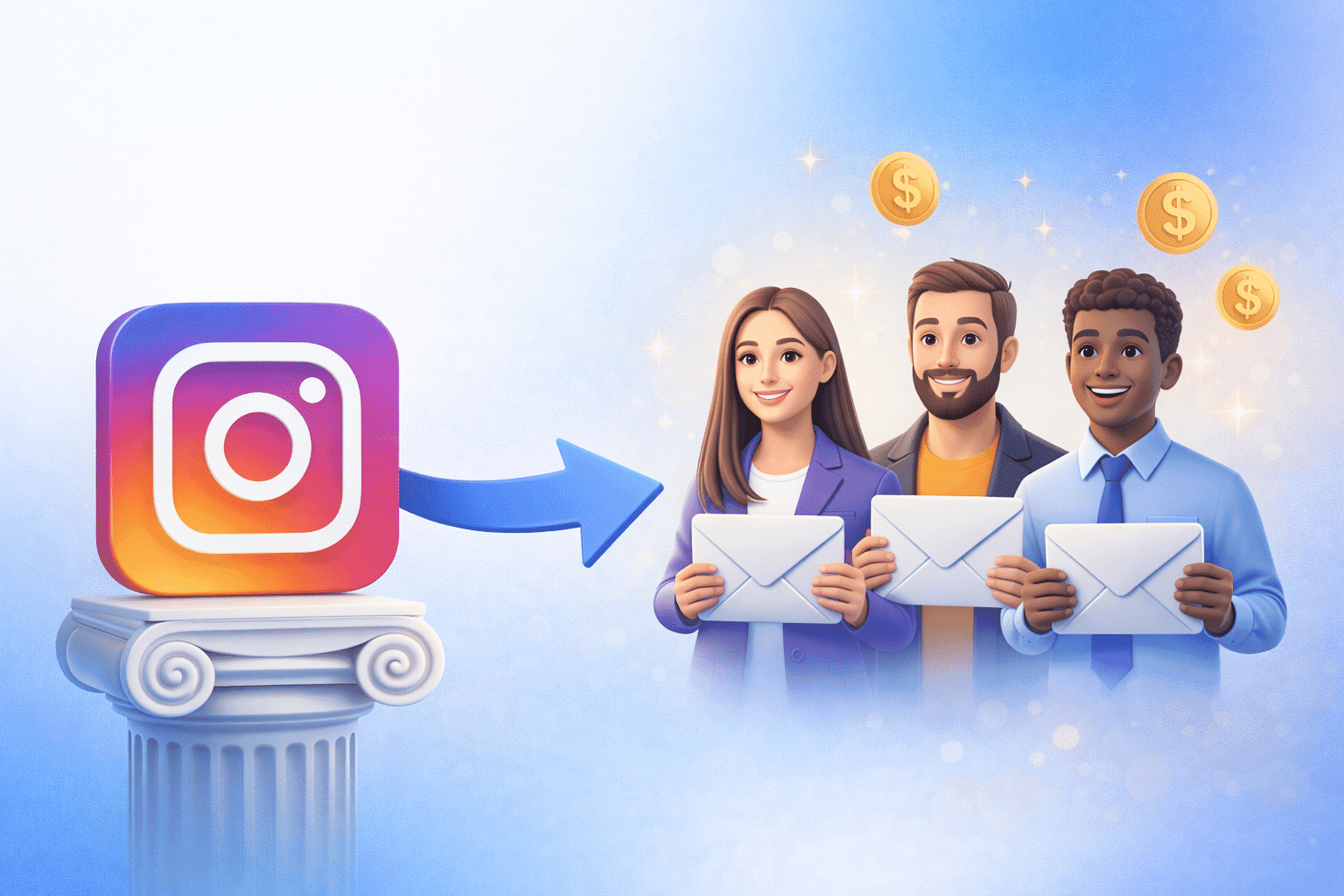
It's worth noting that there are several ways to build a contact list. Besides the classic sign-up forms, you can also collect addresses more proactively. For example, with a tool like Mailerfind you can automatically find and collect the public email addresses of potential customers from social media (such as the followers of an Instagram account in your industry). It's a different approach from the traditional opt-in newsletter: you go out and find the contacts instead of waiting for them to come to you. Either way, the goal is the same: to build a list of people who are interested in what you have to say or sell.
In short, your email list is a fundamental asset of your digital business: it's a direct, personal communication channel that you control 100%. Now let's look at why it's so worth cultivating this asset.
Why an email list is useful (and powerful)
Let's be honest: having your own email list is like having a direct line to your audience, and it brings advantages that few other channels offer. Here are the main reasons why a mailing list is a valuable tool for entrepreneurs and marketers:
- Direct contact (no algorithms): emails land straight in people's inboxes, without going through social media filters. You don't have to worry about algorithms reducing the visibility of your posts – every subscriber really receives your message. This gives you complete control over your communication.
- High ROI: email marketing is famous for its extremely high return on investment. According to industry studies, it can generate an average of around €36 in return for every €1 spent. No other marketing channel has a cost/benefit ratio like that! Sending emails costs little and can pay off hugely in terms of sales generated.
- Low cost and independence: once you have a contact list, you can reach it for free (or close to it). You don't have to pay Facebook or Google every time you want to show a message to your audience. This makes the email list an extremely cheap tool in the long run. For example, a tool like Mailerfind lets you get targeted contacts at very low cost, giving you the same leads you would otherwise have to acquire by paying for advertising. You save budget and you own your database.
- It's "your" channel: the email list belongs to you. Your contacts are yours as long as you treat them with respect – unlike social media followers, whom you could lose if the platform shuts down or changes its rules. Your email database stays with you and nobody can take it away. It's a business asset that grows in value over time as the list grows.
- Personalization and trust: with email you can segment your audience and personalize content for specific groups of subscribers. That means you can send highly relevant messages (e.g. different offers for customers vs. new subscribers, content tailored to different interests). This level of personalization makes every subscriber feel unique and increases trust in your brand. Over time, by delivering value, you build a direct relationship with your community of contacts.
- Automation and scalability: thanks to autoresponders and email marketing platforms, you can create automated email sequences (for example a series of welcome emails for new subscribers, or post-purchase follow-ups to build customer loyalty). These automations work for you 24/7 and let you grow the relationship with thousands of people at scale, without having to send every single email by hand.
In short, a well-kept email list lets you communicate whenever you want with your most interested audience, at a trivial cost and with tangible results in terms of conversions and sales. Now let's get to the heart of it: how do you build this list from scratch?
How to build an email list from scratch
Building a mailing list from scratch can feel like a huge challenge – I know it well, I've been there too. The good news is that you don't need thousands of contacts right away, or an endless advertising budget. By following a few fundamental steps, you can start collecting your first subscribers and then grow gradually. Here's how:
Define your ideal audience: First of all, ask yourself who you want on your list. Who are the people who would benefit from your content or offers? Define your target specifically: for example "freelancers in the design industry looking for marketing advice" or "moms who love yoga". The clearer your audience is to you, the better you'll be able to offer something that truly attracts them. I, for one, outlined the profile of my ideal subscribers (small digital entrepreneurs) before I even created the sign-up form.
Prepare an irresistible incentive (lead magnet): Nobody hands over their email for no reason. To convince someone to subscribe, you have to offer something in return. It can be valuable free content (an ebook, a PDF guide, a video tutorial, an email mini-course), an exclusive discount if you run an e-commerce store, access to a free webinar, or simply a genuinely useful and interesting newsletter. This incentive is called a lead magnet. Make sure it's highly relevant to the audience you defined in step 1, so they'll be motivated to leave you their email. In my early days, for instance, I created a small 10-page PDF guide with practical tips, which brought in dozens of subscribers in the first few days.
Choose the right tools: To get started you'll need a few technical tools. In particular:
- A reliable email marketing platform (e.g. Mailchimp, MailerLite, Brevo/Sendinblue, ActiveCampaign, etc.) to manage the list, send emails and create any automations. Some are free to get started (MailerLite, for example, has a free plan with a subscriber limit).
- A sign-up form or a landing page on your site where people can leave their email. You can use the built-in forms offered by the email marketing platform you've chosen, or dedicated plugins (e.g. if you use WordPress there are plugins for sign-up forms). What matters is that it's clearly visible and easy to fill in.
- Optionally, a tool like Mailerfind if you plan to add proactive contact collection. For example, Mailerfind can help you find the emails of potential subscribers on Instagram and contact them directly (in practice it lets you create an initial list even if your site still gets little traffic).
Create and place the sign-up form: Now you need to put the offer from step 2 into practice. Create the sign-up form connected to your email marketing platform, including the essential fields (name and email address are more than enough). Also write a short description of what users will get by subscribing (e.g. "Subscribe and get the free XYZ guide + weekly tips by email"). Place this form in strategic spots:
- On your home page or in your site's sidebar (places that are visible right away).
- At the end of every blog article (so that people who read all the way through can subscribe to get more).
- Optionally in a well-designed pop-up or banner that appears on the site (without overdoing it, so you don't annoy people).
- On a dedicated page (landing page) that you can also use to share your lead magnet on social media or by email.
Make sure signing up is simple and fast: the fewer fields and the less hassle, the better. Name and email are usually enough; you can collect the rest of the information later if needed.
Use your existing channels to invite people: Now that your setup is ready, use everything you have to drive traffic to that sign-up form. Do you already have followers on LinkedIn, Instagram, Facebook? Invite them to download your lead magnet by subscribing. Do you have customer or colleague contacts? You can send a personal email announcing your new newsletter and its valuable content. Put the link to the sign-up page in your email signature, in your social media bios, anywhere someone can see it. In short, spread the word that this opportunity exists and what users get out of subscribing.
What if you're starting from absolute zero? If you really don't have any initial audience, you can still take your first steps proactively. For example, you could find Facebook groups or forums where your target audience hangs out and share (in a non-spammy way) the free resource you've created, inviting interested people to subscribe to get it. Or, as I mentioned, use Mailerfind: imagine being able to retrieve the emails of the Instagram followers of a competitor who covers topics similar to yours. With Mailerfind you can do exactly that, collect those public contacts and send them an introductory email with your lead magnet. Of course, this is a cold email strategy that has to be used with care – you'll need to explain clearly who you are and why you're contacting them, offering value right away – but it can give you the initial push to populate your list. I tested this tactic myself by contacting a list of potential leads found via Instagram: with a very personal and transparent approach, I got my first subscribers without spending a euro on ads.
Remember: building an email list takes time. At first you'll see sign-ups trickle in, but don't get discouraged. It's better to have a few contacts who are truly interested than hundreds picked at random. With consistency and by always offering value, you'll see your mailing list grow month after month.
How to grow your email list (without paid advertising)
Once you're up and running, the question becomes: how do I grow my mailing list consistently, without necessarily investing in advertising? Fortunately there are plenty of organic growth strategies (free or low-cost) that I've tried and that work. Here are 10 effective tactics to increase the subscribers on your email list without spending a fortune on ads:
- Offer an irresistible lead magnet: We've said it already, but it's worth repeating. Keep improving and promoting your free content or sign-up incentive. The more useful and specific your lead magnet is for your audience, the more people will want to download it and leave you their email. You can also create new ones periodically to attract different audience segments.
- Optimize forms and calls to action on your site: Make sure your sign-up forms are clearly visible and grab attention. Try contrasting colors for the "Subscribe" button and clear copy. Experiment with different call-to-action wording (e.g. "Download the free guide" vs. "Subscribe to the newsletter") to see what converts best. You can add smart pop-ups (for example ones that appear after X seconds or when the user is about to leave the page) to capture attention without coming across as too intrusive. Many email marketing tools (or dedicated plugins like HelloBar, OptinMonster, etc.) offer these features.
- Make the most of your blog content (content upgrade): If you have a blog or produce content, use the content upgrade technique. In practice, you offer readers of one of your articles something extra related to that topic in exchange for subscribing. For example: do you have a post called "10 tips to save time at work"? Create a downloadable PDF with "5 more bonus tips" available only by subscribing. Or attach templates, checklists, extra videos – in short, reward readers with additional resources if they join the list.
- Promote the newsletter on social media: Your social channels are great for bringing in new subscribers. Every now and then, remind your social audience that you have a newsletter or free resource. For example, you can:
- Pin a post to the top of your Facebook page or a featured tweet with the link to the sign-up landing page.
- Use your Instagram bio with an invitation like "🎁 Download my free guide -> link in bio" and of course put the link there.
- Publish Instagram or LinkedIn stories about what you send in the newsletter, perhaps showing positive feedback from subscribers (social proof) to spark the curiosity of potential new subscribers.
- On YouTube, if you have a channel, mention the newsletter at the end of your videos and put the sign-up link in the description.
The idea is to weave the promotion of your mailing list into your social activity without sounding monotonous: alternate these invitations with regular content.
- Collaborate with other creators or partners: Partnerships can speed up growth. For example, you could write a guest post on someone's blog in your industry, including an invitation to download your lead magnet in the bio or in the text. Or organize a webinar or online event together: you and your partner both promote the event, collecting the participants' emails (so the list grows for both of you). You could also do a newsletter shout-out swap: you recommend a partner's newsletter and they recommend yours, reaching a new but like-minded audience.
- Launch a contest or giveaway: Prize contests work well for getting subscribers quickly. You can give away one of your own products/services for free, or a gift relevant to your industry, and make signing up to your mailing list a condition of entry. Promote the contest on social media and perhaps on dedicated platforms. Make sure the prize is tempting enough (but also targeted at your audience, to avoid "prize hunters" who aren't really interested in your content).
- Implement a referral program: Turn your current subscribers into ambassadors. For example, you could say: "Invite a friend to subscribe and you'll get an exclusive bonus". There are tools that automate referral programs for newsletters (like SparkLoop and similar), or you can even handle it manually at first. This method taps into word of mouth: if people like your content, they'll be happy to recommend it.
- Use Mailerfind to reach new leads: Besides organic methods, remember that you can actively look for interested contacts. Mailerfind, for example, lets you identify people who may be interested (such as followers of a competitor or of an industry hashtag) and get their public email contact details. That way you can expand your list by contacting people who don't know you yet but match your target. This targeted approach can grow your list without spending on ads, drawing directly from audiences that already exist. Careful: always treat these contacts with care – it's essential to send relevant emails, explain how you got their contact details (e.g. "I'm writing because we share an interest in X on Instagram") and make it easy for them to unsubscribe. Used well, Mailerfind can give you hundreds of new qualified leads in a short time, to then nurture with your content.
- Take part in events (online and offline): If you speak at a webinar, a conference, a podcast, or even live events, use the opportunity to grow your list. At the end of your presentation, invite the audience to subscribe to your newsletter to get the slides, a summary or an extra bonus. Or collect emails in person if you're at an in-person event (perhaps with an iPad for instant sign-up, or by passing around a sign-up sheet, even though you'll have to enter them yourself afterwards). People who listened to you are often happy to stay in touch to learn more.
- Keep your promises and deliver consistent value: This point is more about keeping subscribers (and turning them into promoters) than getting new ones, but it's crucial. If people love your emails, they'll recommend them to others spontaneously. So once someone subscribes thanks to the tactics above, make sure you give them a great experience: useful content, no spam, a regular cadence. A satisfied subscriber might forward one of your emails to an interested colleague or talk about your newsletter with others – bringing you more subscribers with no extra effort!
Putting even just a few of these strategies into practice can grow your list significantly over time, without necessarily resorting to paid advertising. The important thing is to monitor what works best for your audience and do more of it. For example, I found that content upgrades on the blog and cross-collaborations with other authors brought me dozens of new subscribers every month: so I invested more energy in those tactics. Find your best channels and push on those.
(Note: always remember quality over quantity. It's better to have 1,000 truly interested subscribers who open and read than 10,000 collected at random who ignore your emails. Every now and then, clean inactive subscribers off your list and focus on engaging the active ones. That way you'll keep open rates high and your list "healthy".)
How to use your email list to generate sales
Having lots of subscribers isn't enough: the end goal, especially for a business, is to turn those contacts into customers and generate revenue. How do you go from emails to sales? Let's look at some key strategies to monetize your list effectively (without alienating your subscribers):
- Build relationships before selling: People buy more willingly from those they know and trust. That's why it's essential not to bombard people with offers as soon as they join your list. Instead, build a relationship. For example, set up a series of welcome emails for new subscribers: in the first 2-3 emails, tell your story, share useful free tips, show how you can help them (case studies, testimonials from satisfied customers). Only after providing value can you introduce a first product or service for sale. This introductory sequence "warms up" the lead, increasing their readiness to buy.
- Segment and make targeted offers: Use the information you have about your subscribers (sign-up source, stated interests, browsing or purchase behavior) to segment the list. That way you can send targeted promotions. Example: do you run a clothing e-commerce store? If you know that 500 subscribers looked at the shoe section, send them a special discount on shoes, while you send other offers to everyone else. Or, if you collected contacts with Mailerfind focused on a certain interest (e.g. followers of a specific brand), you can create an offer that mentions that very brand or need, to be super relevant. Segmentation increases conversions because the email feels written "just for" whoever is reading it.
- Alternate valuable content with promotional emails: A golden rule in email marketing is 80/20: 80% of your communications should offer value (education, entertainment, useful information) and only 20% should be explicitly sales-oriented. If every email is "Buy this, buy that", subscribers will lose interest or feel used. But if you get them used to receiving genuine tips, guides and interesting news, when the email with a commercial offer arrives they'll welcome it. For example, you could send a weekly newsletter full of free insights, and once a month include a special promotion reserved for subscribers (a discount code, early access to a new product, etc.). That way the list sees a benefit in being subscribed.
- Create urgency and clear CTAs in your offers: When you launch an offer by email, make sure you include a clearly visible call to action (CTA) (a "Buy now with the discount" button, for example) and perhaps an element of urgency or scarcity. For example: "Offer valid until Sunday", or "Only 50 spots available for the advanced webinar". These levers push the undecided to act right away instead of putting it off. Naturally the urgency has to be genuine, not fake, so you don't lose credibility.
- Use stories and testimonials: The beauty of email is that you can tell stories that engage people emotionally. You can share case studies of satisfied customers (showing the results they got thanks to your product/service), or your personal story of how you solved a problem – then introducing the product that offers that solution. Stories keep attention high and make your offer more memorable. In addition, including real testimonials or user reviews in the email can give that extra push (social proof) to convince the undecided.
- Monitor results and optimize: Email marketing offers plenty of metrics: open rates, click-through rates (CTR), conversions, and so on. Analyze these statistics to understand what's working and what isn't. If you notice that certain sales emails get few clicks, try improving the subject line or the call to action next time, or segmenting better. Run A/B tests on your campaigns: for example, two versions of an email with different subject lines, to see which gets more opens. Over time you'll sharpen your ability to generate sales by email more and more, learning from the data.
Practical example: to give you a concrete idea, let me tell you about an experience of mine. A few months ago I launched a new online course. Instead of promoting it cold right away, I sent my list 3 emails of pure value (educational content from the course, free practical tips). In the fourth email I announced that enrollment was open with a 20% early bird discount just for subscribers, valid for 3 days. The result? Within 72 hours, 15% of subscribers had visited the course page and I converted several leads into buyers, reaching half of my sales target thanks to the mailing list alone, without spending anything on advertising. This shows the power of a well-nurtured email list: when you launch an offer, you already have an audience that's receptive and ready to buy.
In short, to monetize your email list remember to offer value, know your audience (segmentation) and present the right offers at the right time. With these precautions, your mailing list can become one of the most profitable sales channels you have.
Useful tools to manage (and grow) your email list
Managing a contact list and doing email marketing professionally requires the right tools. Fortunately there are plenty of them, suited to different needs and budgets. Here I'll present some key types of tools (with examples) and how they can help you, including a comparison between different solutions:
-
Email Marketing Platforms (ESPs): these are online services that let you manage your list, create and send emails and newsletters, automate sequences, and track statistics. Some of the most popular:
- Mailchimp: Probably the best known, great for getting started. It has a free plan up to about 500 contacts and an intuitive interface with a drag-and-drop editor for creating professional-looking emails. It offers basic automations and some segmentation features. On the downside, the cost goes up as you grow and advanced features are limited on the free plans.
- MailerLite: A highly regarded alternative for its simplicity and affordability. Free plan up to 1,000 subscribers, it lets you create even complex email automations, landing pages and pop-ups. The editor is easy and the emails come out clean. Ideal for bloggers, small businesses and creators who want modern features (it also has A/B testing, tags for segmentation, etc.) at a low cost.
- Brevo (formerly Sendinblue): A French-European platform with a strong focus on automations and an integrated CRM. The free plan includes unlimited contacts with up to 300 emails per day, which is great because it doesn't cap the number of contacts. It includes SMS marketing, advanced segmentation and a good editor. Great for anyone who wants to grow while keeping costs down and staying GDPR-compliant (EU servers).
- ActiveCampaign: A more advanced and more expensive tier, designed for those with serious marketing automation needs. It offers very sophisticated automations, lead scoring and integrations with sales CRMs. There's no free plan and the learning curve is steeper, but it's powerful for structured companies that want to automate every aspect of customer communication.
- Other options: There are really many (Constant Contact, Klaviyo specialized in e-commerce, Benchmark, HubSpot, etc.), but beginners can happily start with one of the first ones mentioned.
Comparison: All of these platforms help you send newsletters and manage your list, but none of them gets you contacts on its own: you're the one who has to get people to subscribe through forms, campaigns, etc. In short, they are management and sending tools.
-
Tools for sign-up forms and popups: Many ESPs (Email Service Providers) already include forms and popups, but sometimes you may want dedicated tools to increase sign-up conversions on your site. Examples: HelloBar, OptinMonster, Sumo offer suites of tools to create banners, top bars, slide-ins, exit-intent popups, and more. These tools often also provide A/B testing on sign-up campaigns and analytics to optimize. If your goal is to maximize subscribers from your site traffic, it's worth trying a few. For example, HelloBar (famous for its top bars) claims it can noticeably increase the percentage of visitors who subscribe with the right wording and offers.
-
Tools for advanced lead generation: this is where Mailerfind fits in. Unlike the tools above (focused on sending emails to contacts you've already acquired), Mailerfind helps you find new contacts and expand your list proactively. It works like this: you enter Instagram-related criteria (for example the name of an influencer account in your industry, a hashtag or a location) and the platform extracts a list of relevant Instagram users, collecting their public data (such as name and email). You end up with lots of potential leads interested in your field. From there you can:
- Export these contacts and import them into your preferred email marketing platform, perhaps sending them an initial outreach campaign.
- Or use Mailerfind directly to send emails (the platform in fact includes a built-in bulk email sending module, with ready-made templates and anti-spam systems to improve inbox delivery). In practice Mailerfind also works as a mini-ESP focused on cold email campaigns.
Why consider Mailerfind? If your priority is to quickly grow your email database with targeted contacts, this tool offers a unique approach: instead of waiting for leads to come to you, you go and get them from a huge pool like Instagram. It's especially useful if you have few subscribers and want to give yourself an initial push, or if you operate in a highly competitive industry where advertising is expensive – here you can reach your audience organically. Of course, the extracted contacts need to be handled with tact: it's always good practice to send a gentle first email, almost like an invitation, while respecting the regulations (Mailerfind itself guarantees that it operates only on public data and includes the mandatory unsubscribe link in every email you send through its platform, for GDPR compliance). In essence, Mailerfind complements the other tools: for example, you could use Mailerfind to generate 1,000 new qualified leads and then nurture them with Mailchimp/MailerLite by sending regular newsletters.
-
Other useful tools: depending on your needs, you might also integrate:
- CRM (Customer Relationship Management) to track the interactions of individual contacts beyond email (especially if you do consultative or B2B selling, where you follow leads one by one).
- Analytics tools like Google Analytics on your site to see where subscribers come from (which pages or channels work best).
- Landing page platforms if your email platform doesn't have advanced features in that area (e.g. Leadpages, Unbounce, Instapage) – but they're often not necessary at the start.
In conclusion, the choice of tools depends on your case: if you're just starting out, a simple MailerLite for sending emails + a few forms on your site may be enough. If you aim to speed things up, you can add Mailerfind for the active lead generation side. If you already have a large list, you may need ActiveCampaign for advanced automation, and so on. What matters is to have at least one email marketing tool to communicate with subscribers and one or more acquisition tools to grow the list.
(A small personal tip: don't overcomplicate your life at the start with a thousand tools. Start with a lean stack, learn to use it well, and add other tools as you feel a concrete need for them.)
Email list FAQ
Below you'll find some frequently asked questions (FAQ) about building and managing an email list, with concise answers based on my experience:
How can I get people to subscribe to my mailing list?
You have to give them a good reason! Offer a clear, valuable incentive (the famous lead magnet we talked about). Communicate the benefit well: for example, "Subscribe to receive exclusive tips on [topic] every week" or "Download the free ebook with 50 ideas for [the problem you solve]". Make sure the sign-up form is visible and the process is simple. Finally, build your reputation by providing great public content (articles, social posts): if they see you as an authoritative source, they'll be more inclined to trust you and subscribe.
How often should I send emails to my list?
The ideal frequency depends on your audience and the type of content, but what matters is consistency. Avoid letting months go by without checking in, otherwise subscribers forget about you. At the same time, don't overdo it by sending daily emails if you don't really have something valuable to say, otherwise you risk annoying people. In general, a good cadence for many businesses is 1 email a week or every two weeks. You can increase the frequency on special occasions (launches, time-limited promotions) but let people know, so they aren't surprised to receive more messages than usual. Watch the metrics: if sending more often causes a sharp drop in opens or lots of unsubscribes, you may be overdoing it. Better a few good emails than lots of useless ones.
Is it a good idea to buy ready-made email lists?
No, it's one of the most common and serious mistakes to avoid. Buying email databases may seem like a shortcut, but it comes with big problems:
- Most of those people don't know you and never gave consent to receive your emails – so they're very likely to report your messages as spam.
- You risk violating the GDPR and other anti-spam laws, putting yourself in unpleasant legal situations (as well as damaging the reputation of your sending domain).
- Purchased lists are often low quality: old or not really interested contacts who don't open emails. Result: very low open rates and possibly your email account getting banned for spam.
Better to build the list patiently, even slowly, but with genuinely interested people. If you need to give growth a boost, use legitimate methods like partnerships, viral content or tools like Mailerfind (which still work on public data and in a targeted way, not on packages of anonymous emails).
Is it legal to send emails to people who haven't filled out my form (e.g. contacts found on the Internet)?
The legal question is delicate. As a general rule, to send promotional emails to individuals in Italy and the EU you need their explicit consent (opt-in), unless it's a specific B2B context or contacts taken from public directories for offers relevant to their professional activity. If you collect addresses published online (such as through Mailerfind, which extracts public data), make sure to:
- Contact only people who are potentially interested in what you offer (relevance).
- Send a very soft first message, introducing yourself and explaining how you got their details (transparency).
- Always include an unsubscribe link at the bottom of the email and immediately honor anyone who asks not to receive further communications.
Mailerfind states that it is GDPR-compliant by using only public information and providing the opt-out tools, but it's up to you to use these contacts responsibly. To be on the safe side, the best way remains to build the list with double opt-in (voluntary sign-up + confirmation via email) so you have proof of consent. In any case, never spam: besides being illegal, it ruins your brand's reputation.
What mistakes should I avoid in email marketing?
Here are a few I've learned to avoid over time:
- Not segmenting the list: sending the exact same emails to all subscribers can be ineffective. For example, sending promos for a product they've already bought, or advanced content to people who are new and inexperienced. Always segment when possible.
- Messages that are too long or unclear: people have full inboxes, you have to get to the point. Endless emails or ones with barely visible calls to action perform poorly. Better brevity and clarity, especially in promotional emails.
- Forgetting the subject line and preview text: if the subject line doesn't grab attention (without being spammy) the email might not even be opened. The same goes for the little preview text that many clients display. Take good care of them.
- Not respecting privacy and etiquette: sending without using the BCC (blind carbon copy) field and revealing everyone's emails, or not including the unsubscribe link, are serious mistakes. Use a reputable platform that automatically adds the unsubscribe link and your company details as required by law at the bottom of emails.
- Expecting immediate results and selling yourself short: building trust takes time. Don't despair if few people buy from your emails at first. And don't give in to the temptation to fill inboxes every day with incredible teleshopping-style offers – that devalues your brand. Better a balanced approach.
In essence, avoid shortcuts and nurture your relationship with subscribers: always imagine that on the other side is a real person, who deserves respect.