
A local gym owner does not need 50,000 random followers. They need 200 people within driving distance who already engage with fitness content and are ready to buy. That is why location based Instagram leads matter. They shrink the gap between attention and action by helping you find people in the right place, with the right context, at the right time.
For businesses that sell locally or regionally, this is one of the fastest ways to stop guessing. Instead of throwing money at broad ads or waiting for organic reach to crawl upward, you can build prospect lists from Instagram users connected to a specific city, venue, neighborhood, or business location. Then you can move those prospects into direct outreach and measurable campaigns.
What location based Instagram leads actually are
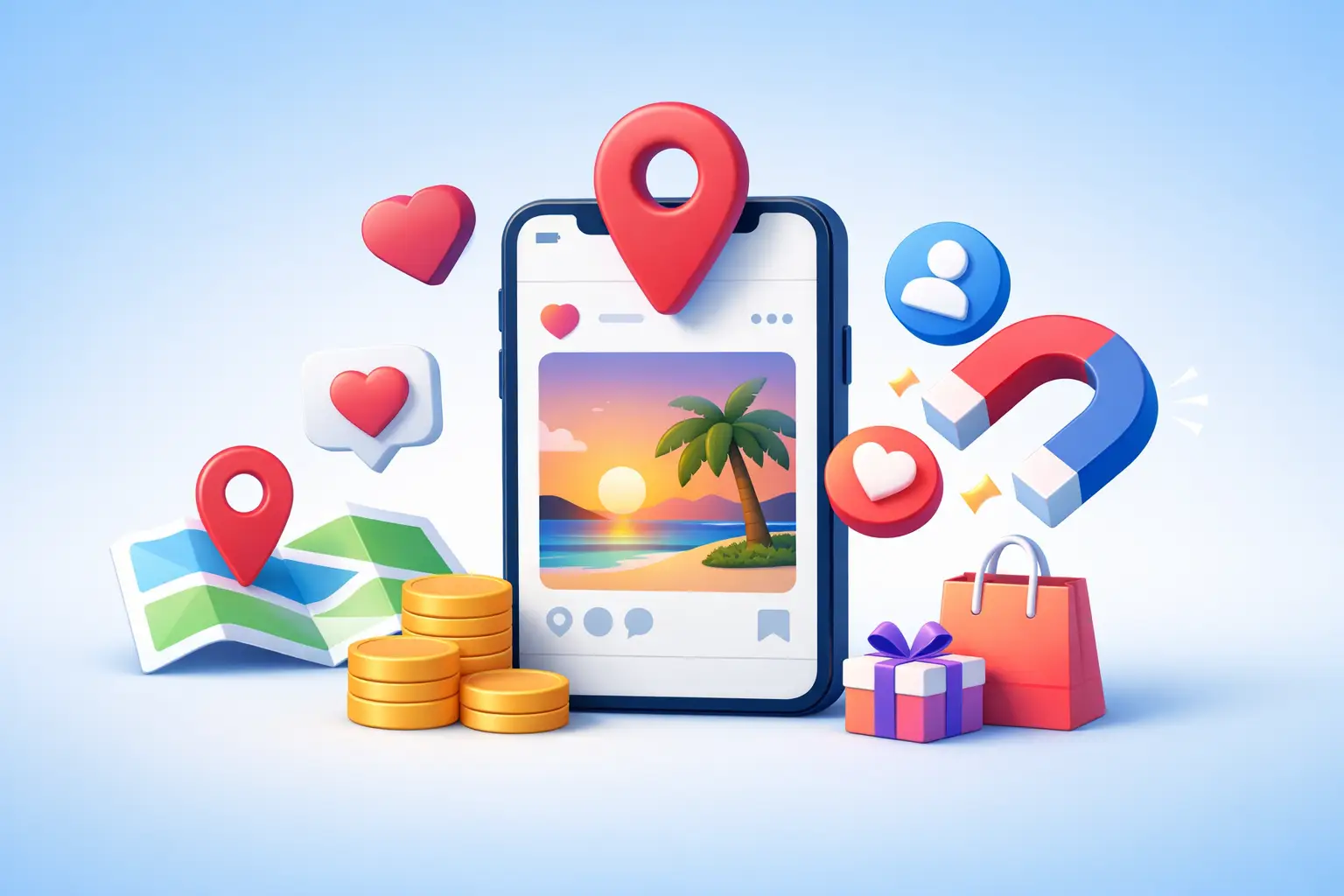
Location based Instagram leads are prospects sourced from Instagram activity tied to a place. That place could be a tagged restaurant in Austin, a coworking space in Miami, a trade show venue in Chicago, or a luxury apartment building in Los Angeles. The common thread is geography with intent.
That intent is what makes these leads more valuable than generic social audiences. Someone posting from a bridal expo, commenting on a beach club, or following a neighborhood coffee shop is signaling real-world relevance. If your offer depends on proximity, timing, or local demand, that signal matters.
This works well for service businesses, agencies, real estate professionals, event operators, coaches, med spas, restaurants, and retail brands. It also works for B2B companies targeting business owners in a defined market. A marketing agency, for example, can identify local business communities through places, industry meetups, and competitor audiences instead of buying expensive local ad inventory with weak targeting.
Why location based Instagram leads outperform broad targeting
Broad targeting looks efficient on paper, but it wastes budget fast. You pay to reach people outside your service area, people with no buying intent, and people who will never take the next step. Location-based prospecting filters a large part of that waste before outreach even begins.
The advantage is not just geography. It is relevance layered on top of geography. If someone engages with a specific local business, visits a location-tagged place, or follows brands clustered around a market segment, you get a more practical picture of who they are. That gives you better segmentation and sharper messaging.
A wedding photographer targeting users connected to local venues is working with stronger intent than one targeting “engaged women 24-35.” A B2B software consultant pulling audiences tied to coworking hubs, conferences, or local startup spaces is starting with a better list than someone blasting cold ads to an entire metro area.
That does not mean every location-based lead is sales-ready. Some will be casual visitors. Some will be tourists. Some will be irrelevant. But even with that noise, the hit rate is usually better than broad interest targeting because place creates context, and context improves outreach.
How to find the right locations on Instagram
The quality of your lead list depends on the quality of the locations you choose. Most businesses start too wide. They target a city and assume that is enough. Usually it is not.
A smarter move is to think in layers. Start with your ideal customer and ask where they spend time, both physically and socially. If you sell high-ticket aesthetics, local luxury gyms, boutique hotels, premium salons, and upscale shopping areas may be stronger sources than a city center tag. If you sell B2B services, conference venues, chamber events, coworking spaces, and competitor storefronts may produce better prospects than a broad downtown location.
You should also separate permanent locations from event-driven ones. Permanent locations give you ongoing lead flow. Event locations create spikes of timely opportunity. Both matter, but they support different campaigns. A real estate agent may build evergreen prospecting around apartment complexes and neighborhood hubs while also running short-term outreach around home expos and investor events.
Turning Instagram location data into usable lead lists
Raw audience discovery is not enough. You need a workflow that turns Instagram activity into a list you can act on.
The practical process is simple. First, identify high-value locations relevant to your offer. Next, collect audiences connected to those places, including users who posted, engaged, or appeared in adjacent account ecosystems. Then segment that audience by likely fit. Some businesses segment by location type, some by competitor overlap, and some by offer readiness.
After that, the list needs to move into outreach. This is where many teams get stuck. They can find people, but they cannot turn those people into campaigns without wasting hours on manual work. That is why an end-to-end system matters. If you can extract publicly available contact data, organize it, and launch email outreach from the same workflow, you remove a huge amount of friction.
For example, a med spa targeting users from nearby beauty businesses and luxury fitness studios can build separate campaigns by audience source. The messaging to gym-connected prospects might emphasize recovery and body-focused treatments. The messaging to salon-connected prospects might focus on skin or appearance. Same city, different angle.
What good outreach looks like after you find location based Instagram leads
The mistake most businesses make is treating these leads like a mass list. That kills response rates.
Good outreach reflects why the prospect is on your list in the first place. If they are tied to a local venue, mention the local context. If they are connected to a market-specific place, shape the pitch around that use case. The goal is not to sound creepy or overly personal. The goal is to sound relevant.
A weak message says, “We help businesses grow. Want to chat?” That gets ignored. A stronger message says, “We work with fitness businesses in Scottsdale that want more local bookings without relying only on paid ads.” It is specific, commercially clear, and easy to evaluate.
Keep the ask small. Start conversations, do not force demos. Local and regional outreach works best when the message feels timely and practical. You are not trying to impress. You are trying to give the prospect a reason to reply.
Where this strategy works best
Location based Instagram leads are especially effective when the sale depends on place, speed, or high local relevance. That includes home services, clinics, fitness studios, restaurants, agencies, local education brands, wedding vendors, real estate, tourism businesses, and many B2B service providers.
It can also work for eCommerce, but the fit depends on the offer. If your product has strong local identity, event relevance, or geographic demand patterns, location-based sourcing can perform well. If you sell a generic product nationwide with no local angle, the value may be lower than interest- or competitor-based targeting.
That is the real trade-off. Location is powerful when place influences buying behavior. If place has little to do with the purchase, other Instagram lead sources may be stronger.
Common mistakes that waste the opportunity
The biggest mistake is going too broad and calling it targeted. A whole city is not always a qualified audience. Another mistake is using the same message for every location segment. Different places signal different buyer intent.
Some teams also chase volume over fit. More leads do not help if the offer is mismatched. A smaller list from the right local ecosystem often outperforms a huge list built from weak location tags.
Then there is timing. Event-based leads lose value quickly. If someone engaged with a conference location last week, outreach this month may already be stale. Local prospecting works best when your speed matches the signal.
A faster path from discovery to revenue
The reason this strategy keeps gaining traction is simple. Businesses are tired of paying more for less. Ad costs rise, organic reach gets thinner, and generic lead databases rarely tell you who is active in your market right now.
Location-based Instagram prospecting gives you a tighter route. You identify where your buyers gather, pull relevant audiences, and move them into direct outreach with clear commercial intent. That is a more controlled acquisition model than hoping the algorithm puts your offer in front of the right people.
Tools like Mailerfind fit this model because they reduce the operational drag. You do not need a technical setup, a complex scraping stack, or a disconnected outreach system. You need a way to go from Instagram audience discovery to campaign execution without turning lead generation into a full-time admin job.
If your business wins or loses based on local demand, nearby buyers, or regional service areas, this is not a side tactic. It is a practical sales channel. Start with the places that already shape your market, and let the quality of those signals guide your next campaign.