 English
 Español
 Português
 Italiano
 Français
 繁體中文
 Türkçe


Before we start
Okay, before we begin, we want to make sure you know what a CTA is 🤔
The Call To Action (CTA) is the last line you write in your email, right before your signature. What you're after is giving your prospect a clear next step so they reply or know what to do.
After reading your email, your recipient needs to be clear on what to do next. Whether that's replying to the email, booking a call, watching a video…
What NOT to do in your CTA
This is the most common mistake.
Don't focus exclusively on selling
Although cold emails are a great way to win new clients, your emails should never focus exclusively on selling.
If you write a CTA that sounds very salesy, with the sole goal of getting them to buy or try your product, the recipient will see you as spam (and rightly so).
Why? They barely know you and you're already trying to sell them something.
Focus first on building a relationship and offering value. We'll see how to do that in a moment. It's easier than it sounds.
3 Types of CTA
In 2024 there are 3 ways to end an email:
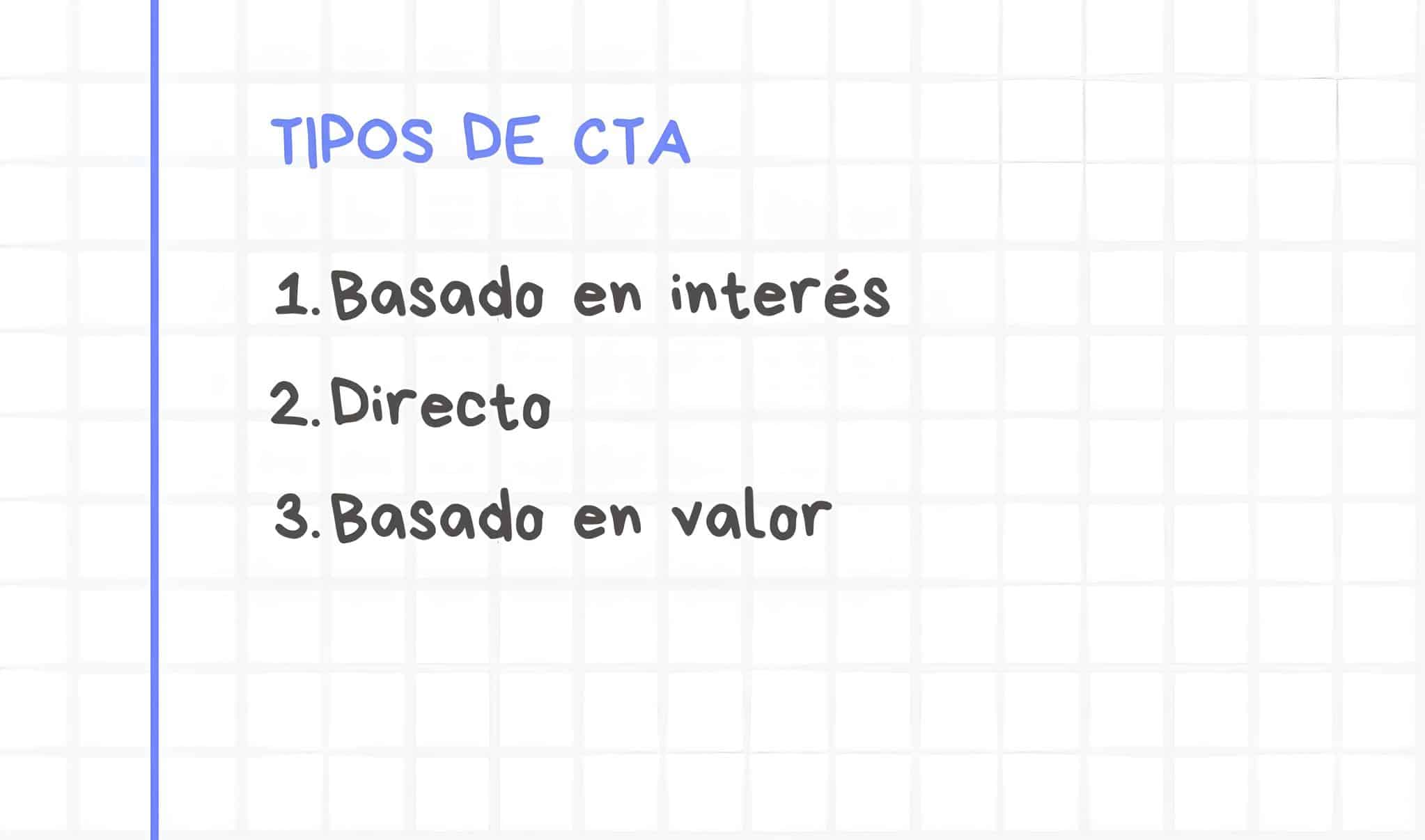
Choosing the right option can raise your reply rates from 2% to 20%, and we're not kidding.
Interest-based CTA
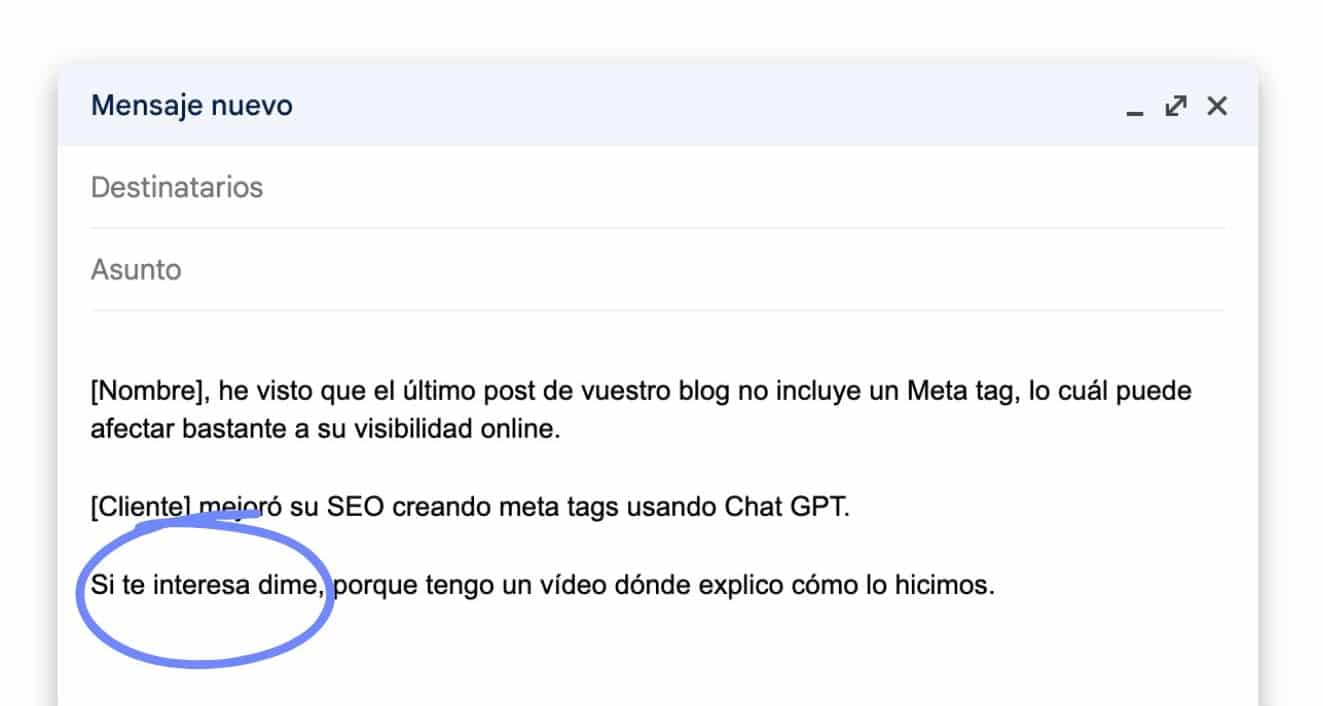
Interested? Reply to this email and we'll look at it together.
I'd love to hear your thoughts
Let me know what you think
Reply if you want to know more!
If you have a spare moment, would you like me to show you the lead generation "machine" we've built?
We'd love to have you on our podcast. If you like the idea, let me know 🙂
Lines like these can intrigue the recipient and make them want to talk to you. They'll probably reply with "Send me more info" or "Yes, I'm interested".
We used this type of CTA until very recently. They're fine, subtle and can work well, but it's true that it's the least personalized way to end your email.
Direct CTA
These are calls to action where you directly offer your recipient the chance to schedule a call with you.
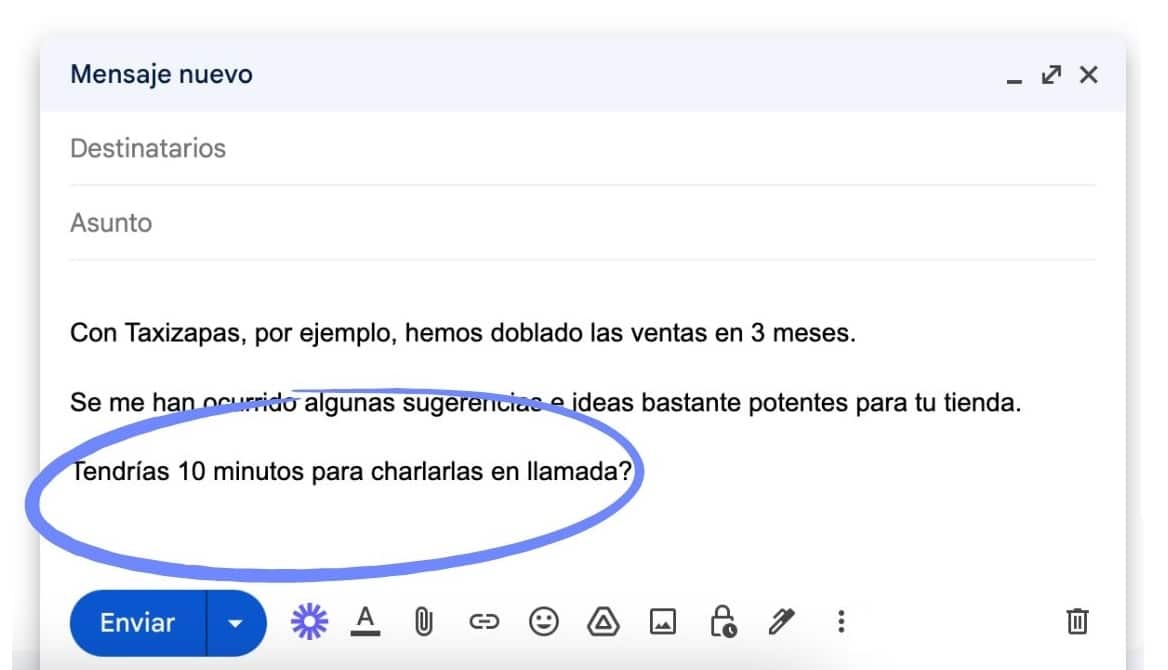
I'd like to share my screen in a 10-15 minute meet and hear your thoughts. Do you have a slot in the morning this week?
Do you have 10 minutes free this week so I can show you the process in a bit more depth?
Would it work for you to talk about it on [date, time]?
What day of the week works for you to talk about it?
Would you like us to go over it together in a 10-minute meet/call?
I think we could build a really great win-win collaboration between our companies. Shall we talk about it in more detail on a call?
You can also use calendar links 🗓️ 🔗
Sending emails back and forth about the best time for both of you to meet can create a lot of friction. And, in the end, the more effort your recipient has to put in, the lower your chances of meeting with them.
You can save some time and make their life easier by sending a link to your calendar, like Cal.com or Calendly, so they can book whichever slot suits them in your schedule.
To confirm how useful this tip is, we ran an A/B test to see what worked best.
As you can see:
- version A offers recipients a meeting at a specific time
- version B directly offers a calendar link
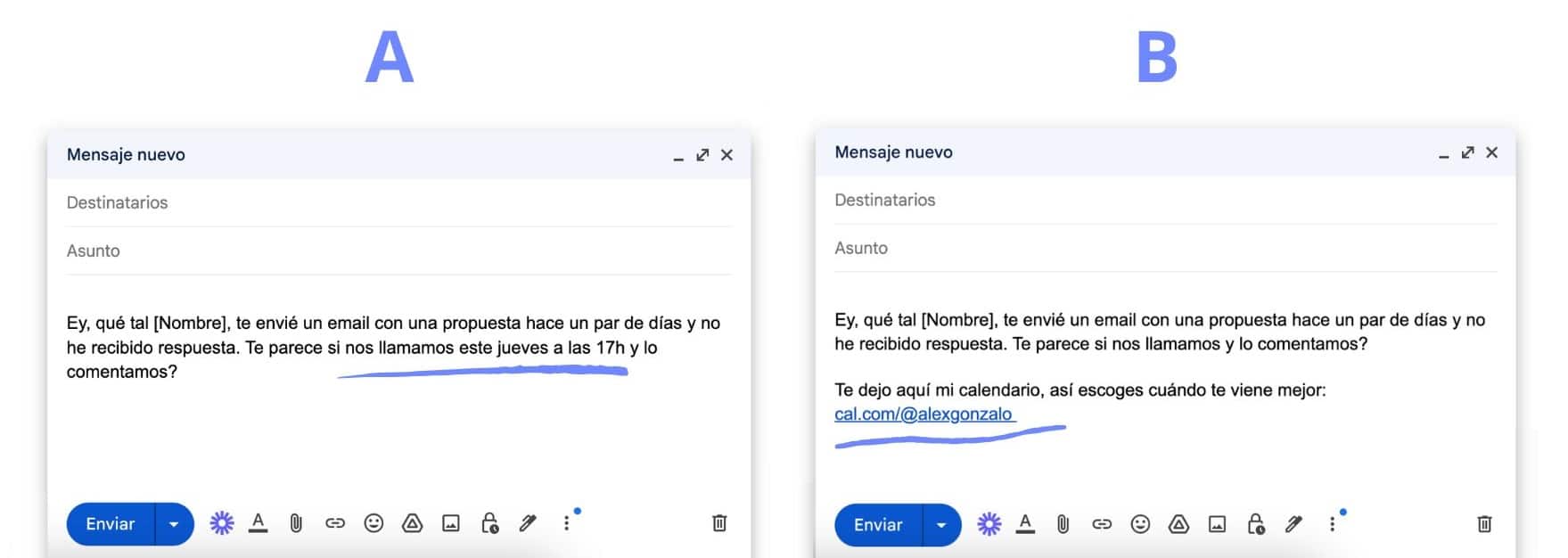
- version A got 8 meetings in a week
- version B got 12 meetings in a week
That's 1.5 times more meetings booked using a calendar link.
That said, this can depend on the audience you're targeting, so you can run an A/B test yourself.
Value-based CTA
This type of CTA gets a 10/10🚀from us.
This strategy revolves around offering something valuable for free. You focus on what your prospect wants, not what you want.
That's why you'll need to invest some time researching and identifying the problems of your ideal client. That way you can design a tailored solution to share with them.
We also call this solution a 'lead magnet'.
The best CTAs are tied to lead magnets 🧲
A lead magnet is a free, valuable resource you offer to grab your recipient's attention and build trust and authority by showing that you're an expert in your field.
A question we ask ourselves when creating a cold email campaign is "How can we make this email worthwhile and useful for the person receiving it?"
If you send something valuable that helps them solve their problem, you'll get replies, interested prospects and meetings. Guaranteed. End of story.
7 proven CTA examples
Here are some examples that we, or Mailerfind clients, have used with very good results:
Lead magnet → A personalized, live demo of a lead generation software where the recipient gets a list of 1,000 contacts of potential clients built for them
CTA → If you find it useful, we can build you a list of 1,000 of your ideal clients on a call.
Lead magnet → A 15-20 minute audit offering personalized ideas/suggestions on how to grow their online store
CTA → I've come up with some pretty powerful suggestions and ideas for your store. Would you have 10 minutes to go over them on a call?
Lead magnet → A live online event explaining how to turn social media into a client acquisition machine
CTA → If you're interested in the event, I'd appreciate it if you registered as soon as possible to secure your spot.
Lead magnet → An email template that gets replies.
CTA → Would you be interested if I shared a cold email template that's getting us 50+ meetings per week?
Lead magnet → A guide to 15 different ways to win clients that we use at our agency
CTA → I recently put together this free guide, let me know if it's useful!
Lead magnet → A 10-minute Loom video explaining how you could work together
CTA → I've recorded a short Loom explaining how we could work together and what you could stand to gain, so let me know if it's a fit!
Lead magnet → A checklist for building PPC (pay-per-click) campaigns: 20 points to verify before launching your ads.
CTA → Let me know if you're interested in the checklist and I'll send it over!
More lead magnet ideas
Templates
Podcasts
Trainings
Guides
Ebooks
YouTube videos
Online events
Consultations
Audits
Webinars
Masterclasses
Loom videos
Reports or studies
Case studies
Audios
Free trials
Checklists
Quizzes
Giveaways
Workshops
Calculators
Toolkits
Resource lists
Predictions
PDFs
Scripts
Facebook or Telegram groups
Challenges
This is the process we use to come up with lead magnet ideas:
-
- Make a list of all the problems your ideal client or recipient has.
- Make a list of the solutions to those problems that you could offer.
- Of those solutions, which one can you deliver for free and at the largest scale possible? Turn it into a lead magnet.
- Write your CTA based on the lead magnet.
In short, Problem → Solution / Lead magnet → Value-based CTA.
And yes, I understand you may prefer not to use this type of CTA, especially if you don't have a lead magnet ready. Creating one takes time and forces you to understand everything about your ideal client, but it's truly worth it and you'll thank yourself in the long run.
If you can't create a lead magnet for now, we suggest going with an interest-based CTA.
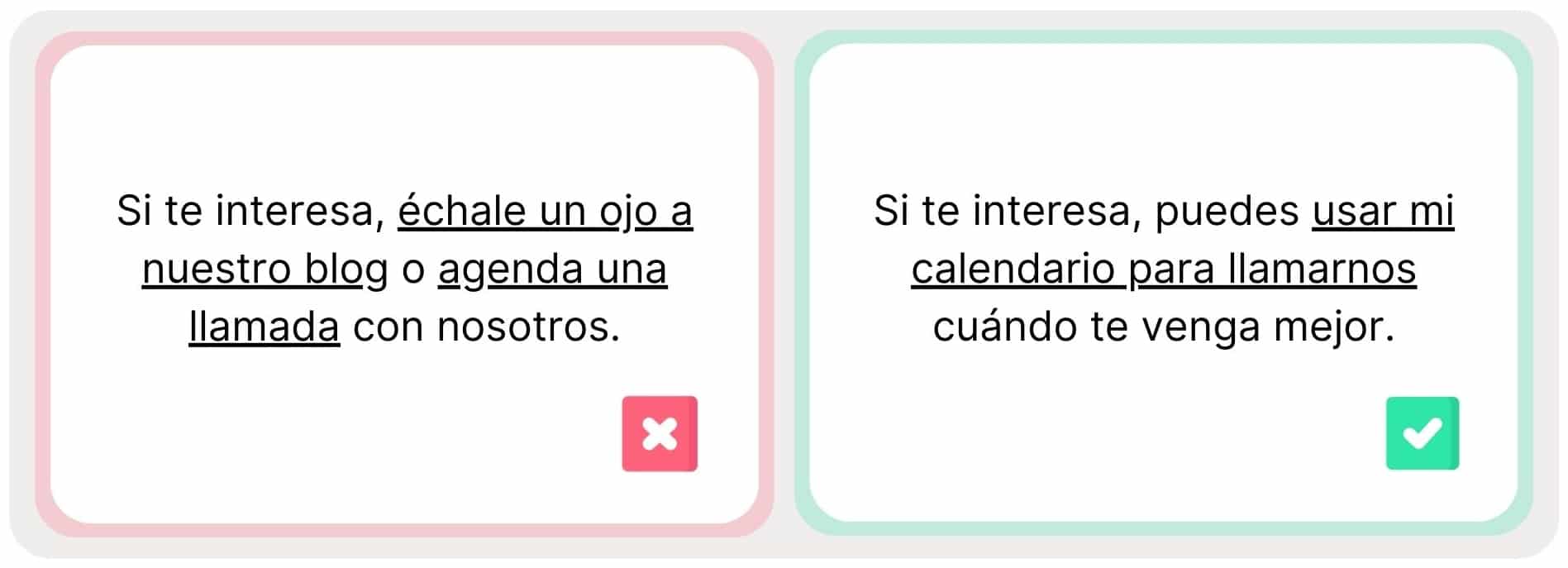
Avoid overwhelming them with more than one CTA
Make the next step they need to take clear. Make sure you focus on a single, clear, specific action.
Conclusion
▶️ Spot the pattern? Simple, friendly, personal CTAs that don't "sell".
PS: Run an A/B test with different calls to action and see which one works best.
Although CTAs aren't as well known as subject lines, they're just as important for writing an effective cold email.
They're the final nudge to convince your prospect to take action.